
Ivy League - the Elite American Universities Guide
Ivy League: 8 universities, 4.2-7% admission rates, $200B endowment. Harvard, Yale, Princeton - complete guide: history, requirements, costs. Realistic for international applicants.

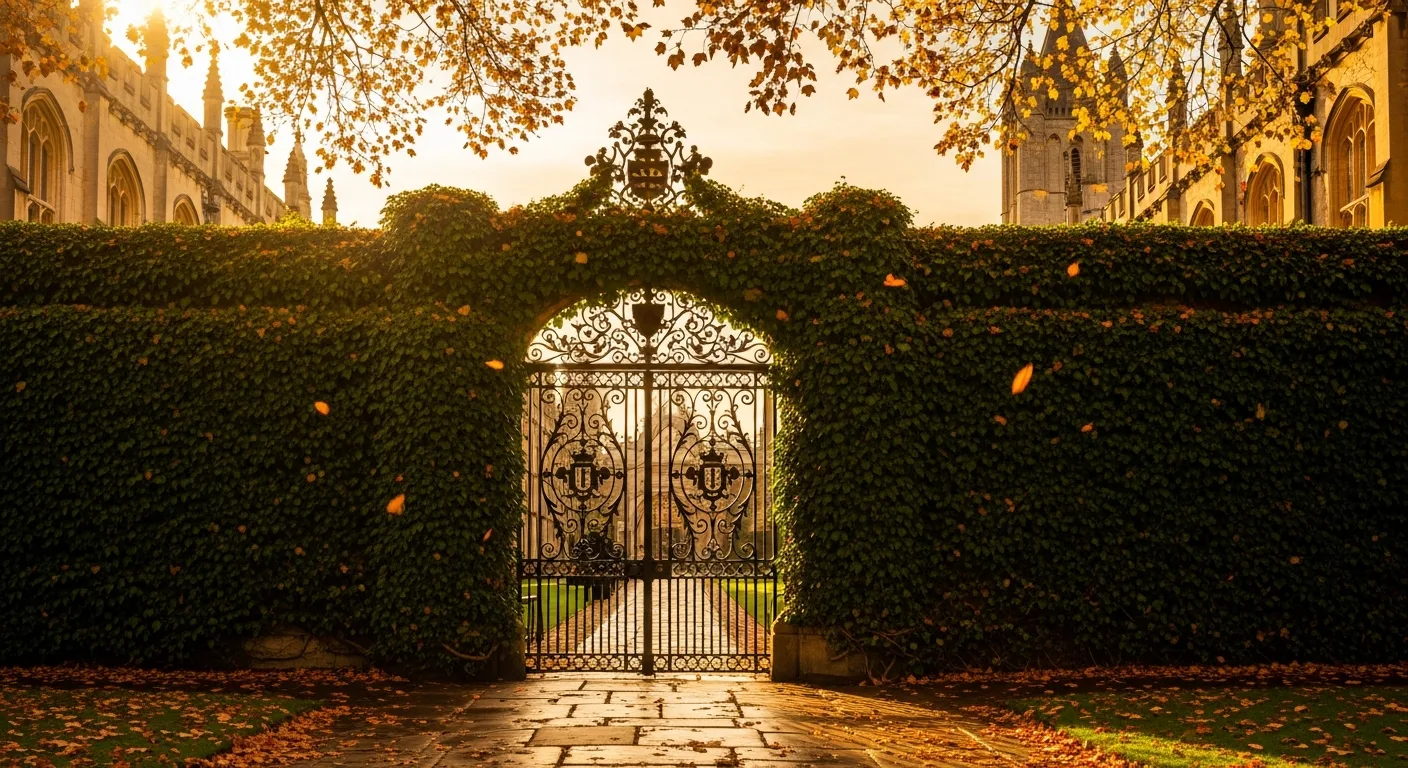
Photos: Wikimedia Commons
In the 2025/2026 admissions cycle, Harvard University admitted just 4.2% of applicants - and most Ivy League universities recorded admission rates below 5%. This exclusive group of eight US universities has set worldwide standards in higher education, research, and innovation for decades. Over 400 Nobel laureates, 31 heads of state, and 358 billionaires (per Forbes ranking) are associated with the Ivy League.
A crucial clarification up front - particularly for international readers who often hear the term without context: the Ivy League is not an academic ranking, but an athletic conference founded in 1954. Academically, Stanford, MIT, and Caltech are at a comparable or higher level but are not part of the Ivy League. When insiders refer to “the best US universities,” they typically mean HYPSM (Harvard, Yale, Princeton, Stanford, MIT) - this is the group that defines US-academic excellence at the very top. The Ivy League itself remains the strongest brand construct, however - the name alone opens doors worldwide.
Ivy League is today more than a sports federation: it represents a particular form of academic excellence with global resonance. In 2026, the combined endowment of the eight universities exceeds USD 200 billion - more than the GDP of many nations. Harvard’s endowment alone (USD 50.9 billion) exceeds the annual education budget of most European countries.
The 8 Ivy League universities - 2026 quick reference:
| University | Admission Rate (Class of 2029) | SAT Median | Location |
|---|---|---|---|
| Harvard University | 4.2% | 1530-1580 | Cambridge, MA |
| Yale University | 4.59% | 1510-1580 | New Haven, CT |
| Columbia University | 4.29% | 1510-1570 | New York, NY |
| Princeton University | 4.4% | 1510-1580 | Princeton, NJ |
| University of Pennsylvania | 4.9% | 1500-1560 | Philadelphia, PA |
| Brown University | ~5.0% | 1490-1560 | Providence, RI |
| Dartmouth College | 6.03% | 1490-1560 | Hanover, NH |
| Cornell University | ~7.0% | 1470-1550 | Ithaca, NY |
For perspective: the average admission rate of 4.7% means roughly 20 times more applications are rejected than accepted. Compared to top engineering programs at IIT Delhi (~1% admission for the most selective branches) or Singapore’s NUS Computer Science (acceptance rate ~7-8% for international applicants), Ivy League selectivity rivals the most selective programs at top global universities - though IIT and NUS evaluate primarily on entrance exam scores, while Ivy admission is holistic.
How did the Ivy League originate?
The Ivy League is formally an NCAA Division I athletic conference, founded in 1954 - not an academic ranking, not an official university association. The history of its member universities, however, reaches much further back: Harvard, the oldest in the group, was founded in 1636 - before the United States existed. The term “Ivy League” first appeared in 1933, coined by Caswell Adams, a sports journalist for the New York Tribune, describing the older universities of the East Coast whose campus buildings were covered in ivy.
What started as an athletic conference rapidly transformed into a synonym for academic elite. Admission rates have fallen steadily over decades - from roughly 20% in the 1970s to historic lows in the 2025/2026 cycle (Class of 2029):
- Harvard University: 4.2%
- Yale University: 4.59%
- Columbia University: 4.29%
- Princeton University: 4.4%
- University of Pennsylvania: 4.9%
- Brown University: ~5.0%
- Dartmouth College: 6.03%
- Cornell University: ~7.0%
Application volumes continue to grow: in 2025, the eight schools received over 400,000 applications combined - a 150% increase over 2010. The international share is particularly dynamic, currently averaging 28% of all applications.
The research output remains impressive: in 2023 alone, Ivy League researchers published over 50,000 peer-reviewed articles and secured research grants exceeding USD 8 billion. Breakthrough discoveries range from the first electronic computer ENIAC (University of Pennsylvania) to pioneering AI research (Harvard in collaboration with MIT - which, as noted, is not an Ivy League member).
Evolution of academic standards
In the 1960s, democratization of access began. Harvard introduced Need-blind Admission in 1966 as the first university - a candidate’s financial situation does not affect admission decisions. In 1969, Yale and Princeton became the first Ivies to admit women to undergraduate programs; by 1983, all Ivy League schools were coeducational.
A key moment was the 1975 joint introduction of the Academic Index - an evaluation system combining standardized test scores, GPA, and extracurricular achievements. Modified over the years, it has become a global model for selection processes.
Global influence
Between 1901 and 2024, researchers affiliated with the Ivy League received 437 Nobel Prizes. The MIT-Harvard Broad Institute, founded in 2004, alone contributed to identifying over 30% of cancer-causing genes. In 2025, total research grants awarded to the Ivies exceeded USD 12 billion - about 15% of all federal academic research funding in the United States.
Current challenges
In academic year 2025/2026, average tuition at the Ivies exceeded USD 65,000 per year - fueling debate about elite-education accessibility. A detailed cost analysis is in our guide How Much Does Harvard Cost?. In response, universities have boosted their financial aid funds - Harvard allocated a record USD 2.3 billion to student aid in 2023.
The COVID-19 pandemic accelerated digital transformation: between 2020 and 2024, the Ivies invested USD 5.4 billion combined in online and hybrid learning platforms.
Harvard University - the oldest US university
Founded in 1636, Harvard continues setting global standards with a research budget exceeding USD 1.2 billion in 2026, excelling in medicine, biotechnology, and AI. The Harvard Business School - considered by many rankings the world’s best - records a 98% placement rate within three months of MBA graduation. Harvard Medical School admits only 2.3% of applicants and remains the most selective medical faculty worldwide; Harvard Law School records an 86% Bar Exam pass rate.
Yale University - global humanities hub
Yale, founded in 1701, is a global reference for humanities and Liberal Arts. Notable: a 6:1 student-faculty ratio; with an endowment of approximately USD 41 billion, Yale offers 65% of courses in classes under 20 students. Yale Law School has led US Law School rankings continuously since 1987.
Princeton University - strengths in sciences and mathematics
In the 2026 U.S. News Ranking, Princeton is ranked #1 among national US universities. In 2023, Princeton researchers set a US record by securing five prestigious European Research Council grants. With 45 Nobel laureates and 22 Fields Medalists in its history, Princeton is one of the most significant centers of mathematical and physics research worldwide. As the only Ivy League school, Princeton funds 100% of PhD programs - with a 98.2% completion rate.
Columbia University - journalism and innovation in NYC
Columbia sits in the heart of Manhattan and has administered the Pulitzer Prizes since 1917 - the world’s most important journalism award. Columbia Journalism School admits 15-20% of applicants and remains one of the most selective journalism programs globally. In 2025, Columbia invested USD 3.6 billion in a new climate research center; the university’s research expenditure reaches USD 4.5 billion annually.
University of Pennsylvania - cradle of modern business education
UPenn, founded by Benjamin Franklin in 1740, is home to the Wharton School - the world’s first business school (1881). Wharton receives over 7,000 MBA applications annually for just 850 places. In 2023, Wharton alumni founded startups worth over USD 4.8 billion combined; the average starting salary is USD 175,000 per year.
Penn Medicine currently runs 789 clinical trials and has registered 1,650 medical patents over the past decade. The interdisciplinary “Penn Integrates Knowledge” program requires students to complete projects in at least three different faculties.
Brown University - pioneer of flexible curricula
Brown revolutionized American higher education in 1969 with the Open Curriculum - a system giving students near-total freedom in designing their study plan. The graduation rate rose to 97.5% - the highest in the entire Ivy League. In 2023, Brown students designed 425 unique interdisciplinary pathways.
The “BrownConnect” program ensured in 2025 that 91% of second-year students received paid internships. Brown’s Warren Alpert Medical School conducts pioneering Alzheimer’s research; in 2024 it received USD 387 million in National Institutes of Health funding.
Dartmouth College - excellence in compact format
Dartmouth is the smallest Ivy League and combines research quality with a Liberal Arts College atmosphere. With a 6.2% admission rate (2025), Dartmouth has only 4,458 undergraduates - the most compact academic community in the league. Tuck School of Business at Dartmouth has the highest MBA employment rate in the entire Ivy League - 98.8% within three months of graduation.
The “Dartmouth Plan” divides the academic year into four quarters, allowing students to alternate study with intensive internships and field research - in 2023, Dartmouth students spent a combined 89,000 hours in field research across 43 countries.
Cornell University - from agriculture to quantum technology
Cornell, founded in 1865 as the youngest Ivy, has the broadest program offering. It is the only Ivy with a state-funded agriculture faculty and simultaneously a leader in quantum physics. In 2025, Cornell Tech (Roosevelt Island, NYC) received USD 2.1 billion for AI and robotics research.
Cornell Cooperative Extension - the largest university community-outreach program in the US - supports over 500,000 New York State residents annually. In 2024, Cornell students and staff filed 372 patent applications; the university maintains research collaborations with institutions in 89 countries.
What distinguishes the Ivy League from the rest of the world?
Academic depth
In the QS World University Rankings 2025, all eight Ivies are in the top 20 globally, with a combined citation score of 98.7 out of 100. The average undergraduate class size is just 12 students - conditions difficult to achieve even in the most selective European or Asian universities. 94% of faculty hold the highest academic degree in their field.
World-class selectivity
In academic year 2023/2024, over 450,000 applications were submitted - 4.6% accepted. The median SAT score of admitted students is 1530 out of 1600; 89% belonged to the top 5% of their high school class. Selectivity does not preclude diversity: in 2025, 27% of admitted students were First-Generation, 62% receive significant financial aid.
Financial firepower
The combined endowment of the Ivy League reached an unprecedented USD 235 billion in 2025. This translates to annual spending per student exceeding USD 120,000 - three times more than at US public universities. Ivy League libraries collectively hold over 90 million volumes. In the most recent academic year alone, the Ivies invested USD 12.3 billion in research infrastructure upgrades.
Research and spin-offs
In 2023, Ivy League researchers published 47,238 peer-reviewed articles, filed 1,876 patents, and founded 324 spin-off companies. Particularly notable in medicine - Yale and Harvard Medical School teams jointly developed 12 new cancer therapies that entered clinical trials. Princeton’s Institute for Advanced Study runs the world’s largest quantum-AI research program with 189 researchers from 27 countries.
Alumni network
Ivy League alumni hold 23% of CEO positions in Fortune 500 companies, 31% of US Supreme Court seats, and lead 44% of the world’s most important international organizations (as of 2024). The mentoring program connects over 25,000 students annually with experienced alumni; alumni donations exceeded USD 7.8 billion in 2023.
Global partnerships
The Ivies maintain active research partnerships with 892 institutions in 103 countries (2025). The “Global Scholars” program manages over 12,000 academic exchanges annually. Through Horizon Europe, the Ivies participate in 234 research projects with a combined value of EUR 4.1 billion - a concrete bridge to the European, Asian, and Latin American research landscapes.
Tradition meets innovation
Princeton’s P-rade - America’s oldest alumni parade - has run continuously since 1746. At Yale, the Skull and Bones secret society, founded in 1832, has counted three US presidents among its members; its members manage combined wealth exceeding USD 15 billion. Harvard’s House System, modeled on Oxford and Cambridge College systems, assigns students to one of 12 houses that become their academic home for four years.
Social responsibility
In 2023, Ivy students and staff combined for over 4.2 million hours of volunteer and social work. Brown’s Social Innovation Initiative supported the founding of 178 social enterprises in 45 countries. Columbia’s Earth Institute runs the world’s largest academic climate research program - 2,300 scientists, USD 1.2 billion budget.
Interdisciplinarity
In 2025, 78% of Ivy League students pursue programs combining at least two majors. Yale introduced “Open Curriculum 2.0,” allowing custom-designed degree programs under mentor supervision. Princeton’s Grand Challenges Program engages students across all disciplines in solving global problems - from food security to space exploration.
Digital transformation
Between 2020 and 2024, the Ivies invested USD 8.9 billion in education technology. Harvard’s Digital Scholarship Initiative digitizes 400 years of academic research. Cornell Tech (Roosevelt Island) attracts USD 3.2 billion in venture capital investment annually and is, after Silicon Valley, the second-largest tech innovation hub in the United States.
Politics and economics
Ivy League experts appeared as witnesses before the US Congress 312 times in 2023; their studies were cited in 1,876 legislative documents. Harvard Kennedy School of Government currently trains 41% of all young top political leaders (under 40) worldwide.
Is the Ivy League worth it for international applicants?
A legitimate question given the cost. For most career paths in your home country, a top domestic university - IIT or IISc in India, NUS or NTU in Singapore, IE or IESE in Spain, Bocconi in Italy, HEC Paris or INSEAD in France - is equivalent or superior. These domestic institutions have deep ties to local industries, the local network opens doors locally, and the cost-to-quality ratio is incomparable.
An Ivy League education makes economic sense primarily in three scenarios:
1. International careers in Silicon Valley or US tech. A Stanford, MIT, or Berkeley degree - and to a similar extent an Ivy League degree - opens doors at Google, Apple, Meta, OpenAI faster than most domestic credentials. Visa pipeline (F-1 → STEM-OPT → H-1B) is most favorable for STEM majors.
2. Global strategy consulting (MBB). McKinsey, BCG, and Bain systematically recruit at top US universities. If you want to work as a Senior in MBB engagements in NYC, London, or Singapore, the Ivy brand provides a meaningful boost.
3. US academic career. For research aspirations and a US academic trajectory, Ivy networks and access to research funding represent a unique advantage that’s hard to replicate elsewhere (outside CERN, Max Planck, or specific Indian/Singaporean institutes).
For classic domestic-market careers (corporate management, consulting with regional focus, law, medicine, regional research), a strong domestic degree is the rational choice. For global trajectories, the Ivy League is a real lever - provided financing is sustainable.
Investment with measurable returns
While annual US tuition appears high, the reality is more nuanced. In 2026, over 80% of international students receive significant financial aid - the average aid package exceeds USD 60,000 per year. More on scholarships for studying in the US. The return is measurable: in 2025, the median starting salary for Ivy graduates was USD 92,000-67% above the national average for fresh US graduates.
Support for international students
Each Ivy has an International Student Center with comprehensive support - from visa advice to integration programs. In 2023, the Ivy League hosted over 25,000 students from 165 countries.
International student presence in the Ivy League
International students make up between 20% and 30% of the Ivy League student body, with the largest cohorts coming from China, India, South Korea, Canada, the United Kingdom, and Brazil. Notable international alumni include Sundar Pichai (Google CEO, IIT Kharagpur → Stanford → Wharton), Indra Nooyi (former PepsiCo CEO, Madras Christian → IIM Calcutta → Yale), and Klaus Kleinfeld (German, Würzburg → Wharton, ex-Siemens CEO).
International student associations are active at all eight universities - they organize cultural events, support new students, and build networks across the diaspora. National-specific groups (Indian Students at Harvard, Chinese Students Association at MIT, Korean Society at Princeton) provide cohort-specific community.
Career and networking
Ivy League career offices partner with over 15,000 employers worldwide as of 2026. More on career paths after the Ivy League in our dedicated guide.
Your path to the Ivy League
If you aim for a realistic chance of Ivy League admission, plan for 12-18 months of structured preparation. See our complete US application process guide - it walks through every step, from SAT preparation to application submission.
Detailed profiles of individual universities:
- Harvard - complete application strategy
- Stanford - guide for international applicants
- MIT - step by step
Comparative resources:
The path to the Ivy League is demanding, but achievable with structured preparation and a realistic profile. If you need individual consulting, contact the College Council team. For test preparation, you can practice independently with our PrepClass apps:
Recommended reading
- Ivy League Ranking 2025-2026: complete guide
- Best US University: Harvard, MIT, or Stanford?
- US tuition costs - complete guide
- Career after the Ivy League
Frequently Asked Questions
What is the Ivy League?
The Ivy League is formally an NCAA Division I athletic conference, founded in 1954, comprising eight private universities in the northeastern United States: Harvard, Yale, Princeton, Columbia, University of Pennsylvania, Brown, Dartmouth, and Cornell. Not an academic ranking - but in common usage a globally recognized synonym for US-academic excellence.
What are the 2026 admission rates?
In the 2025/2026 cycle (Class of 2029), rates ranged from 4.2% (Harvard) to about 7% (Cornell). The eight-university average: 4.7%.
How much do Ivy League studies cost?
Annual tuition in 2025/2026 exceeds USD 60,000. With room and board, total annual costs reach USD 85,000-90,000. Over 80% of students receive financial aid. Harvard, Yale, Princeton, and Dartmouth cover 100% of demonstrated need even for international applicants.
Can international students apply for Ivy League scholarships?
Yes. Four of the eight Ivies (Harvard, Princeton, Yale, Dartmouth) are need-blind even for international applicants - meaning the candidate’s financial situation does not influence admission, and 100% of documented need is covered. The other four (Columbia, Cornell, Brown, Penn) are need-aware for internationals - financial situation may affect admission, but post-acceptance aid can be generous. International students should also explore country-specific scholarship programs (e.g., Fulbright Commissions in their home country, regional foundation grants, and lender programs like Prodigy Finance and MPower for non-US-cosigner loans).
What SAT score is needed for the Ivy League?
The median SAT score of admitted students is 1490-1580 out of 1600. The score alone does not guarantee admission - selection committees evaluate holistically (essays, ECs, recommendations, academic profile).
How do the Ivies differ from one another?
Each has its strength: Harvard in law and business, Yale in humanities, Princeton in sciences, Columbia in journalism, Penn (Wharton) in business, Brown in flexible curriculum, Dartmouth in compact format, Cornell in engineering and agriculture.
How do I begin Ivy League application preparation?
Begin SAT/ACT preparation 12-18 months before deadlines, simultaneously refine your extracurricular profile, plan recommendation letters, and develop application essays well in advance. Professional consulting - such as that offered by the College Council team - can measurably increase admission chances.
Sources and methodology
- Harvard, Yale, Princeton, Columbia, Penn, Brown, Dartmouth, Cornell - official admissions and financial aid pages
- QS World University Rankings 2025 - topuniversities.com
- U.S. News & World Report 2026 - national university rankings
- Common Application - commonapp.org - application requirements and deadlines
- NCES - National Center for Education Statistics - federal data on US higher education
- NAFSA - nafsa.org - international student data
- IIE Open Doors Report 2024 - opendoorsdata.org - international student demographics
- College Council - internal data from 50+ client cases (2023-2026)
- Exchange rates - as of April 2026, USD/EUR ≈ 0.92
 TOEFL iBT prep, 2026 format
 Every task type of the new TOEFL, with Speaking and Writing graded by AI.

 Prepclass