
0 EUR
Tuition for EU Citizens
Sweden, Finland, and Denmark, free studies
Study in Scandinavia: free tuition, SU grant, top universities (SSE, Hanken, CBS, KTH, Lund, Uppsala, Aalto). Guide for high school graduates.

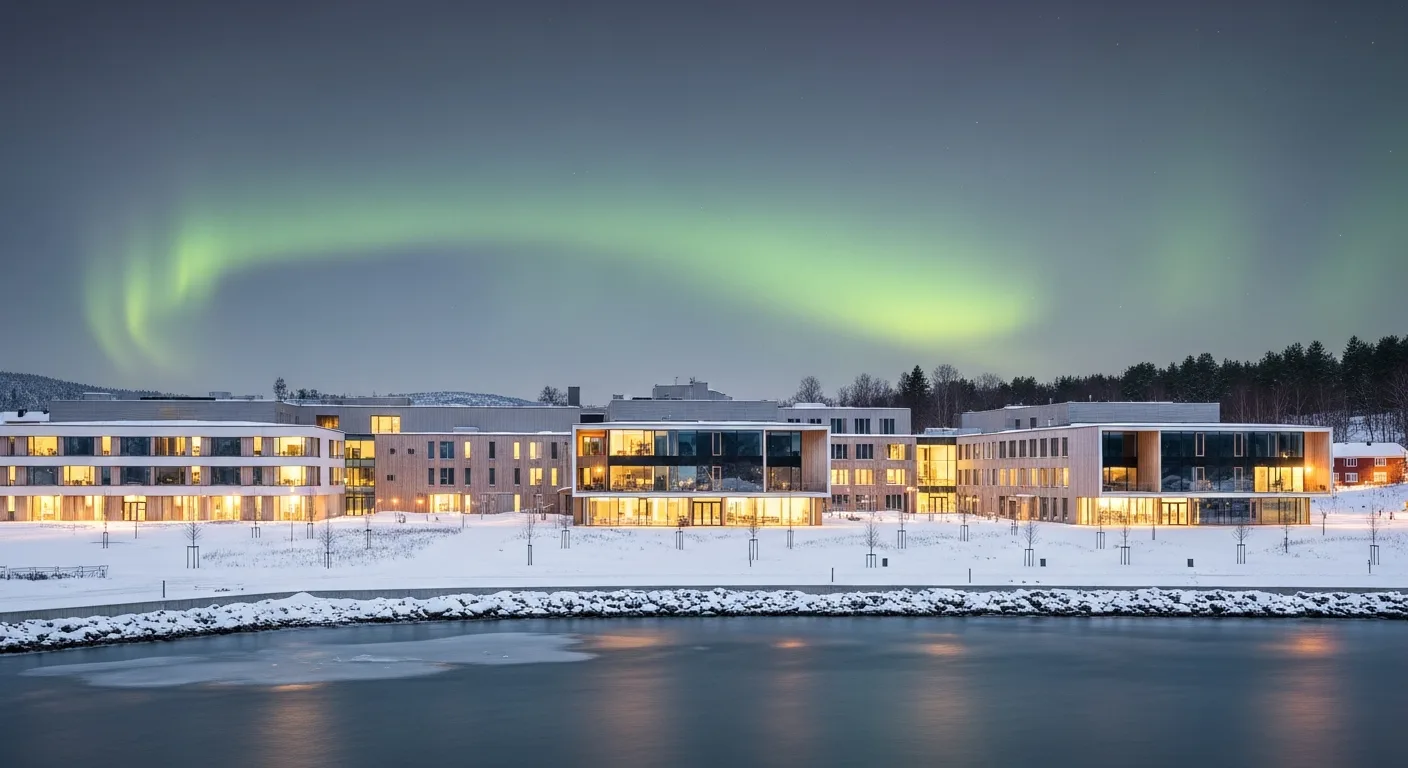
Photos: Wikimedia Commons
It’s mid-January in Stockholm. Outside the library of Kungliga Tekniska Högskolan (KTH), dusk falls at two in the afternoon. It’s minus eight degrees Celsius outside, but inside the campus, life is bustling: a group of students from Politecnico di Milano consults on a project with colleagues from Aalto in Helsinki via video conference, two international students return from the robotics lab, and in the glass halls of the KTH Innovation incubator, someone is pitching a startup that will join EQT’s portfolio in three years. On the windowsill sits a mug with the inscription “fika first, then physics”. Welcome to studying in Scandinavia, a region that offers something you won’t find anywhere else in Europe: zero tuition fees, generous state student grants, world-leading universities, and a quality of life the rest of the continent can only dream of.
Scandinavia (and more broadly - the Nordic countries: Sweden, Denmark, Finland, Norway, and Iceland) is one of the best-kept secrets of European higher education. While international students flock to universities in the UK, Netherlands, and Germany, Northern Europe entices with an offer that sounds almost too good to be true: free tuition for EU citizens in Sweden and Finland, free tuition plus a monthly SU grant of ~6,400 DKK in Denmark, some of the safest cities in the world, native-speaker level English among the local population, and a technological ecosystem that has spawned Spotify, Klarna, Skype, Supercell, LEGO, Novo Nordisk, and Ericsson.
In this guide, I’ll walk you through eight of the most interesting Nordic universities, from the elite Stockholm School of Economics (SSE), through technological powerhouses KTH and Aalto, to classic universities Lund, Uppsala, and Helsinki, and business schools CBS Copenhagen and Hanken Helsinki. You’ll learn about the admissions process for international students, how much life truly costs in the North, how the legendary Danish SU system works, what to expect from the dark winters and work-life balance, and why an SAT score can open doors to the region’s top universities. If you’re looking for studies that combine world-class quality with a reasonable budget, Scandinavia should be at the top of your list.
Before we delve into the details of individual universities, you need to understand Scandinavia’s fundamental advantage over other study destinations abroad. It’s not just about rankings; it’s a systemic difference that makes studying in Northern Europe one of the best financial and life decisions an international student can make.
Free tuition for EU citizens. In Sweden, Finland, and Denmark, studies at public universities are free for EU/EEA citizens. This isn’t a discount or a scholarship; it’s simply a model where higher education is a right, not a privilege. At KTH in Stockholm, Lund University, the University of Helsinki, or Copenhagen Business School, you will pay exactly zero tuition fees. Compare that to UCL in London (28,500 GBP annually), Imperial College (38,000 GBP for engineering), or even Maastricht University in the Netherlands (2,530 EUR). Scandinavia is the only region in Western Europe where top 100 global universities do not charge tuition fees to European students, and simultaneously offer hundreds of programs in English.
The SU system (Danish student grant). Denmark goes a step further. If you study at a Danish university (e.g., CBS) and work legally for a minimum of 10-12 hours per week, you are entitled to SU (Statens Uddannelsesstøtte), a monthly grant of ~6,400 DKK net (approx. 860 EUR). This is not a loan; it’s a non-repayable grant from the state. SU is paid for a maximum of 70 months, which comfortably covers a bachelor’s and master’s degree. Additionally, you can take out a preferential student loan (SU-lån) for an extra 3,500 DKK/month. In Sweden, an analogous system (CSN) is primarily available to residents, but EU students can apply for it after a certain period of residency. In Finland, EU students can apply for KELA housing allowance (up to ~400 EUR/month) if they work.
Quality of life and work-life balance. Scandinavia consistently tops global rankings for quality of life, happiness, and safety for good reason. Stockholm, Copenhagen, and Helsinki regularly rank among the top 10 most liveable cities in the world. As a student, you’ll experience this directly: cycling infrastructure (Copenhagen has more bikes than cars), free healthcare with the EHIC card, a culture of trust (you can leave your laptop in a cafe and no one will take it), and flat social structures (you address your professor by their first name, and they genuinely expect it). The Scandinavian work-life balance isn’t a marketing slogan; it’s a lifestyle that will influence your approach to career and mental health for years to come. Tech companies in Stockholm close their offices at 5 PM, and no one bats an eye.
Each of the three Nordic countries has a different admissions system, but there’s one common feature: a recognized secondary school-leaving diploma is accepted everywhere as a sufficient qualification to apply for bachelor’s studies. You don’t need the IB or A-levels on top of it, or any additional exams (though the SAT can help at SSE and Hanken). Let’s go through it country by country.
Sweden uses the central portal Universityadmissions.se - a single application form for all public universities (KTH, Lund, Uppsala, and also SSE). You apply for a maximum of 4 programs, listing them in order of preference. Your school-leaving results are converted into Swedish qualification points - the system considers both your certificate grades and your final exam scores. Language requirements are typically IELTS 6.5 (7.0 for some programs) or TOEFL iBT 90. Deadline: January 15. Important note: SSE has its own additional admissions test (SSE Admission Test), but also accepts SAT, ACT, or TSA as alternatives - if you’re aiming for SSE, prepare for the test on our SAT app or take the SAT. Prepare your language certificate with our TOEFL app.
Denmark operates through the portal Optagelse.dk with a system of two tracks: Quota 1 (GPA only, with a July 5 deadline) and Quota 2 (holistic - March 15 deadline). For international applicants, Quota 2 is crucial because it allows you to strengthen your application with experience, a motivational letter, and additional qualifications. You can apply for up to 8 programs across Denmark. Language requirements: IELTS 7.0 or TOEFL 91 for most English-taught programs. You can find a full guide to CBS admissions in our Copenhagen Business School guide.
Finland uses the portal Studyinfo.fi. The system is more decentralized - each university may have its own deadlines and requirements. Hanken School of Economics offers SAT-based admission (SAT score instead of an entrance exam), while Helsinki and Aalto require an entrance exam or possession of IB/EB. A recognized school-leaving diploma is accepted, but for the most competitive programs (Aalto BBA, Helsinki CS), you may need an additional exam. Language requirements: typically IELTS 6.0-6.5 or TOEFL 78-92.
| University | School-leaving diploma | IELTS / TOEFL | SAT | Difficulty |
|---|---|---|---|---|
| SSE Stockholm | Very good grades (80%+ advanced level) | IELTS 7.0 / TOEFL 100 | ~1390 (median of admitted) | Very High |
| KTH Stockholm | Advanced Math + Physics (75%+) | IELTS 6.5 / TOEFL 90 | Not Required | Medium-High |
| Lund University | Good grades (70%+ advanced level) | IELTS 6.5 / TOEFL 90 | Not Required | Medium |
| Uppsala University | Good grades (70%+ advanced level) | IELTS 6.5 / TOEFL 90 | Not Required | Medium |
| CBS Copenhagen | 85-95% advanced level (top programs) | IELTS 7.0 / TOEFL 91 | Considered in Quota 2 | High |
| Hanken Helsinki | Recognized (+ exam or SAT) | IELTS 6.0 / TOEFL 78 | ~1100+ (realistic threshold) | Achievable |
| University of Helsinki | Recognized + entrance exam | IELTS 6.5 / TOEFL 92 | Not Required | Medium-High |
| Aalto University | Recognized + test/portfolio | IELTS 6.5 / TOEFL 92 | Not Required | Medium-High |
SSE is a university that stirs emotions. Small (approx. 2,000 students total), intimate, with a campus in the heart of Stockholm (Vasastan district), and simultaneously the best business school in Scandinavia, comparable to LSE in terms of prestige in finance and economics. The difference? SSE charges no tuition fees to EU citizens, and its graduates go straight to McKinsey, Goldman Sachs, Spotify, and EQT (a PE fund founded by SSE alumni).
The program BSc in Business and Economics is a three-year, English-taught bachelor’s degree with an emphasis on economics, finance, and strategy. Admissions are based on school grades plus a test - the SSE Admission Test (logic, data analysis, verbal reasoning) or SAT/ACT/TSA as an alternative. The median SAT score among admitted students is ~1390 - one of the highest thresholds in Europe, on par with King’s College London. Practice on our SAT app - every point counts. The acceptance rate is about 8-10% - SSE is extremely selective, but the reward is proportional: the SSE alumni network in the Nordic region is comparable to the HBS network in the USA.
KTH is the best technical university in Scandinavia and one of the best in Europe, ranked 78th in QS 2025, higher than TU Delft in many engineering categories. The campus in Stockholm (Östermalm) is the cradle of Scandinavian technological innovation; Ericsson, Scania, and Electrolux have their roots here. KTH offers several bachelor’s programs in English, including Bachelor in Information and Communication Technology and Bachelor in Engineering Science (in cooperation with partner universities).
Admissions to KTH are based on your school-leaving grades, with a particular emphasis on advanced level mathematics and physics. The SAT is neither required nor formally accepted; your school-leaving score, converted to Swedish points, is what counts. If you’re considering ETH Zurich or Imperial College, but are deterred by the tuition fees, KTH offers comparable quality of education in fields such as robotics, AI, and sustainable energy for literally zero cost.
Lund University (founded in 1666) holds the 87th position in QS 2025 and is one of the most prestigious universities in Northern Europe. The city of Lund in southern Sweden (20 minutes by train from Malmö, an hour from Copenhagen via the Øresund Bridge) is a classic university town - 40% of its residents are students, and the campus is literally everywhere. The system of student nations (studentnationer, like fraternities but without the toxic culture) creates a social life you won’t experience anywhere else in Europe.
Lund offers a dozen bachelor’s programs in English, from BSc in International Business to BSc in Physics, BSc in Mathematics, and BSc in Development Studies. Admissions via Universityadmissions.se, based on your school-leaving diploma. IELTS 6.5 or TOEFL 90. Lund is a great option if you want to combine solid academic studies with a truly student-centric lifestyle - think nations, balls, Walpurgis Night (April 30, when the entire campus transforms into one big festival).
Uppsala (founded in 1477) is the oldest university in Scandinavia and consistently ranks in the QS top 100 (approx. 105th in 2025). The city of Uppsala is located 40 minutes by train from Stockholm and shares the same character as Lund: compact, student-focused, with historical architecture. The BSc in Business and Economics program (English-taught) and natural science programs attract international students. The nation system (identical to Lund’s) and proximity to Stockholm are additional advantages. Admissions via the central portal, school-leaving diploma, IELTS 6.5, no SAT required.
CBS is a topic for a separate guide, and in fact, we’ve written a full guide to Copenhagen Business School. In short: the largest business school in Northern Europe, triple-accredited (Triple Crown: AACSB, EQUIS, AMBA - top 1% of universities worldwide), free tuition for EU citizens, access to the Danish SU grant (~860 EUR/month), and a flagship BSc in International Business program taught entirely in English. Copenhagen is a European tech (Pleo, Trustpilot, Unity, Zendesk) and consulting hub (McKinsey Copenhagen, one of the largest offices in Europe). CBS does not formally require the SAT, but in the Quota 2 track, an SAT score is considered an additional asset; more details can be found in our guide.
Hanken is a small, elite business school with campuses in Helsinki and Vaasa, the only university in Finland with triple accreditation (AACSB, EQUIS, AMBA). The BSc in International Business program is taught in English and recruits in several ways, including SAT-based admission with a realistic threshold of ~1100 SAT. This is a significantly lower threshold than SSE (~1390), making Hanken an excellent “plan B” option for candidates who want to study business in Northern Europe for free (0 EUR tuition for EU citizens) without the pressure of an ultra-high SAT score.
Hanken has strong ties to the Finnish financial and industrial sectors; graduates go to Nordea, OP Financial Group, Finnish startups, and Nordic Big 4 offices. Finnish academic culture is quiet but demanding - less show, more substance. If you value intellectual depth over networking events, Hanken will appeal to you.
The University of Helsinki ranks in the top 115 in QS 2025 and is by far the best university in Finland, with a tradition dating back to 1640. The campus in central Helsinki (Senate Square) is architecturally spectacular, and the university is strong in virtually all fields - from natural sciences and computer science to social sciences and law. English-taught bachelor’s programs include BSc in Science (physics, chemistry, mathematics, computer science) with admissions based on an entrance exam. Helsinki does not require the SAT (the entrance exam and/or your school-leaving diploma count). Tuition: 0 EUR for EU citizens. Helsinki is a city that offers the best quality-of-life-to-cost ratio in all of Scandinavia - cheaper than Stockholm and Copenhagen, with equally good infrastructure and safety.
Aalto is a relatively young university (formed in 2010 from the merger of three Finnish universities, including the legendary Helsinki School of Economics and Helsinki University of Technology), but it already holds position ~109 in QS 2025 and is recognized as one of the most innovative universities in Europe. The campus in Espoo (15 minutes by metro from central Helsinki), designed by Alvar Aalto, is an architectural attraction in itself. Aalto offers a BBA (Bachelor in International Business) program in English, one of the most sought-after business programs in Finland, with admissions based on the SAT or an entrance exam. The university is also a powerhouse in design (Aalto School of Arts, Design and Architecture, top 10 worldwide) and engineering (especially game development; Supercell and Rovio have their roots at Aalto).
Let’s be honest - Scandinavia is expensive. A cup of coffee in Stockholm costs 50-60 SEK (approx. 4.50 EUR), a beer in a bar 75-90 SEK, and a room in student accommodation can cost 5,000-7,000 SEK per month. But here’s the crucial plot twist: tuition is zero, and financial support systems cover a significant portion of living costs. As a result, the total annual cost of studying in Scandinavia is lower than at most comparable universities in the UK, Netherlands, or Belgium.
Stockholm (SSE, KTH) is the most expensive city in our ranking. A realistic monthly student budget: a room in shared accommodation 5,000-7,500 SEK (440-660 EUR), food 3,000-4,000 SEK (265-350 EUR), transport (student pass) ~700 SEK (62 EUR), phone + internet ~300 SEK. Total: 900-1,200 EUR per month. Annually, this is 11,000-14,500 EUR, and tuition is zero. Compare this to Imperial College London: engineering tuition alone is 38,000 GBP, plus 1,500 GBP/month for living costs = 56,000 GBP annually (over 65,000 EUR). KTH for 14,500 EUR vs Imperial for 65,000 EUR, for comparable engineering rankings.
Copenhagen (CBS) offers an identical price level, 850-1,300 EUR per month for living costs. But the Danish SU system makes the effective cost dramatically lower. If you work 10-12 hours per week (required), you receive ~6,400 DKK net (860 EUR) in SU grant plus earnings from your job (3,500-6,500 DKK, depending on the position). This gives a total monthly income of 10,000-13,000 DKK (1,340-1,740 EUR), enough to cover all costs and even save some. More about SU in our CBS guide.
Helsinki (Hanken, Helsinki, Aalto) is the cheapest of the three capitals, with a room costing 400-650 EUR, food 250-350 EUR, transport ~60 EUR. Total budget: 750-1,100 EUR per month. In Finland, EU students can additionally apply for KELA housing allowance (up to ~400 EUR/month) if they work even a few hours a week. Helsinki is an absolute sweet spot, the cheapest city with top universities and the most generous housing support.
Lund and Uppsala (smaller cities) are cheaper than the capitals: a room 3,500-5,000 SEK (310-440 EUR), total living costs 700-1,000 EUR per month. This is comparable to living costs in many mid-sized Central European cities - but at universities ranked in the QS top 100.
Zero tuition fees are the foundation - but living costs in Scandinavia require additional funding. Fortunately, each Nordic country offers systemic support that makes studying in the North financially feasible, even without wealthy parents.
Denmark - SU (Statens Uddannelsesstøtte) is the absolute star of the Scandinavian system. As an EU student working a minimum of 10-12 hours per week in Denmark, you receive ~6,400 DKK net per month (860 EUR) - a non-repayable grant. In addition, there’s a preferential student loan, SU-lån, for 3,500 DKK/month with minimal interest, repayable only after graduation. SU is paid for 70 months. International students at CBS regularly fund their studies solely through a combination of SU + work - without parental support. This is probably the most generous student support system in Europe, and in itself is an argument for choosing Denmark.
Finland - KELA offers EU students working in Finland a housing allowance (tukiasunto) - up to ~400 EUR per month to cover accommodation costs. You don’t need to work full-time - a few hours a week is enough to qualify. Additionally, Finnish universities (Helsinki, Aalto, Hanken) offer internal scholarships to cover material and living costs.
Sweden - CSN (Centrala studiestödsnämnden) is the Swedish equivalent of SU, but access for EU students is limited - you primarily qualify after a longer period of residence or work in Sweden. At SSE, there are internal merit-based scholarships (partial coverage of living costs) for top students. Nordplus - a Nordic mobility program - offers grants for exchange semesters between Scandinavian universities.
Additional options:
Realistically: in Denmark, SU covers the lion’s share of the budget. In Finland, KELA helps with housing. In Sweden, you’ll need to rely on savings, work, or merit-based scholarships - but zero tuition means you ‘only’ need 10,000-14,500 EUR annually for living costs (vs. 40,000-65,000 EUR in the UK with tuition).
If you’re reading this article, you’re probably wondering if an SAT score will open doors to Nordic universities. The answer: yes, but only at selected universities. Scandinavia is not like the Netherlands or Italy, where the SAT is widely accepted; here, a recognized school-leaving diploma (and at some universities, an entrance exam) is primarily what counts. But where the SAT is accepted, it can give you a real advantage.
SSE Stockholm - The SAT is accepted as an alternative to the SSE Admission Test. Median among admitted students: ~1390 SAT. This is one of the highest thresholds in Europe, on par with Oxford University (considering that Oxford additionally requires AP). Prepare thoroughly on our SAT app - the platform has sections dedicated to the Digital SAT format with full practice tests.
Hanken Helsinki - SAT-based admission with a realistic threshold of ~1100 SAT. This is a much more achievable score. Hanken is a great “plan B” option for candidates aiming for SSE, meaning you can apply to both universities with a single SAT score.
CBS Copenhagen - The SAT is not a formal requirement, but in the Quota 2 track, it is considered an additional element. A score of 1300+ will certainly help, but does not guarantee admission.
KTH, Lund, Uppsala, Helsinki, Aalto - these universities generally do not require or actively promote the SAT. Admissions are based on a school-leaving diploma (Sweden, Finland) or an entrance exam (Finland). Check out our guide to SAT scores for studying in Europe to get the full picture.
In summary: if you’re aiming for SSE or Hanken - prepare for the SAT. For the rest of the Nordic universities, your school-leaving diploma alone will suffice. This is an important difference compared to the UK, where SAT + AP are often required together.
| Criterion | Scandinavia | Netherlands | Germany | UK |
|---|---|---|---|---|
| EU Tuition | 0 EUR | ~2,530 EUR | 0 EUR (public) | 9,250-38,000 GBP |
| Financial Support | SU ~860 EUR/month (DK), KELA (FI) | DUO ~500 EUR/month | BAföG (limited) | Student Loan |
| Living Costs/month | 750-1,300 EUR | 900-1,300 EUR | 600-1,000 EUR | 1,200-2,000 GBP |
| QS Top 100 Universities | 3 (KTH, Lund, Helsinki*) | 4 (UvA, TU Delft, Leiden, Utrecht) | 3 (TUM, LMU, Heidelberg) | 18+ |
| English (programs) | Hundreds of EN programs | Many EN programs | Fewer EN programs (mostly DE) | All EN programs |
| SAT Required? | Only SSE/Hanken | No | No | SAT + AP |
| Work-life balance | Best in Europe | Very good | Good | Average |
| Vibe | Hygge, fika, sauna, nature | Bikes, pragmatism | Order, culture | Prestige, tradition |
You need to know one thing before you decide to study in Scandinavia: winters are dark. Not just a little dark - very dark. In Stockholm in December, the sun rises at 8:45 AM and sets at 2:50 PM; that’s just over six hours of daylight, half of which is grey. In Helsinki, it’s even shorter. This affects mood, energy, and motivation, and it would be dishonest to pretend otherwise. Many universities offer workshops on coping with the “dark season,” SAD lamps, physical activity, vitamin D. After the first winter, you’ll get used to it (say students who’ve survived), and the reward is the Scandinavian summer: white nights in June, 20 hours of daylight, festivals, archipelagos, and temperatures of 20-25°C with endlessly long days.
But beyond the seasonal darkness, student life in Scandinavia is phenomenal. Fika in Sweden - the obligatory coffee and pastry break, embedded in work and study culture - isn’t a whim; it’s a social institution where you build connections more valuable than at networking events. Hygge in Denmark - the Danish concept of coziness and community - ensures that winter evenings in a student kitchen with mulled wine and a board game have a charm you won’t experience in the university halls of UCL. Sauna in Finland - not optional, not touristy, but an elementary social ritual that accompanies you from the first day of orientation (Finnish sauna societies at universities are a serious matter).
The system of student nations (studentnationer) in Lund and Uppsala is something absolutely unique in Europe. These are not American-style fraternities; they are historical student organizations (some over 300 years old) with their own pubs, restaurants, libraries, and ballrooms. Every student joins a nation, which becomes their social base for their studies, organizing balls, gasques (formal dinners), sports leagues, and cooking classes. Walpurgis Night (April 30) in Lund is an event you must see; the entire city takes to the streets to celebrate the end of winter.
In Copenhagen, CBS student life revolves around Fredagsbaren, the Friday student bar, where beer costs 20 DKK and where the international CBS community meets weekly. Copenhagen also offers one of Europe’s best gastronomic scenes (Noma isn’t the only option; street food at Reffen is legendary), cycling infrastructure that is a model for the rest of the world, and a level of safety where you can leave your bike unlocked.
Don’t forget about working during your studies; in Scandinavia, it’s not only allowed but even expected. In Denmark, working 10-12 hours a week is a condition for SU. In Sweden and Finland, there are no formal hourly limits for EU students. Student earnings are significantly higher than in much of Central Europe: 120-170 SEK/hour in Sweden (10-15 EUR), 120-150 DKK/hour in Denmark (16-20 EUR), 10-14 EUR/hour in Finland. Companies like Spotify, Klarna (Stockholm), Novo Nordisk, Maersk (Copenhagen), and Supercell, Wolt (Helsinki) actively recruit students for internships and part-time positions.
Scandinavia offers something no other region in Europe can replicate: universities in the global top 100, zero tuition fees, generous student grants, native-level English proficiency, and a quality of life the rest of the continent can only dream of. Yes, winters are dark. Yes, coffee costs 5 EUR. But when you sum it all up - free education at KTH, SSE, or Lund, the SU grant in Denmark covering living costs, safety, work-life balance, and career prospects in the Spotify-Klarna-Novo Nordisk ecosystem - it’s hard to find a better offer on the continent.
For an international student, Scandinavia is particularly attractive because:
Scandinavia awaits. Fika, sauna, and zero tuition - what’s stopping you?