UCL London: admissions, requirements, costs, scholarships, and student life. How to get into UCL? A complete guide for international applicants.
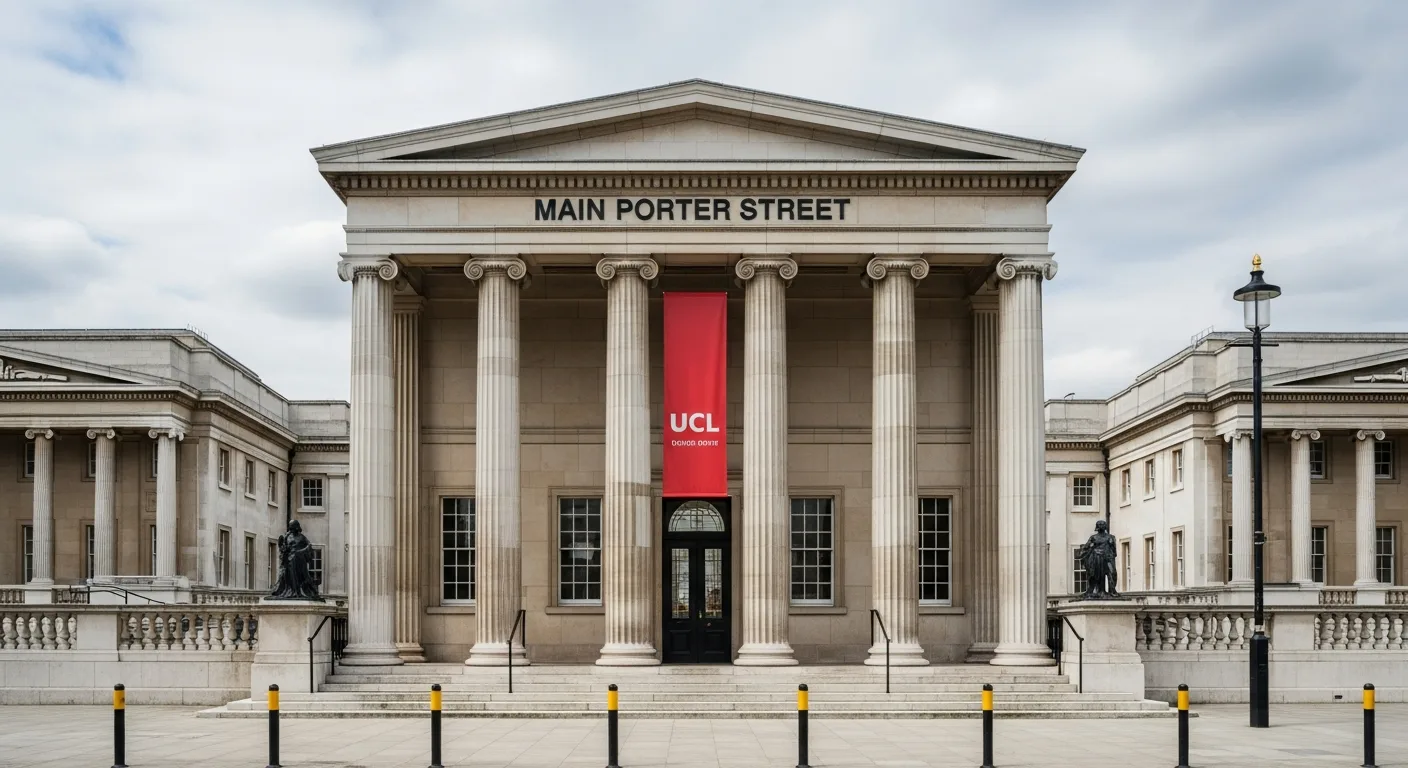
You stand on Gower Street in the Bloomsbury district, gazing at the neoclassical portico with columns, beyond which lies the UCL quad. To your left: the British Museum, which you can enter for free between lectures. To your right, cafes are bustling with students, laptops open, surrounded by stacks of academic papers. In the main hall of the building, behind a glass display, sits the mummified body of Jeremy Bentham: the philosopher who, in 1826, envisioned a university open to all, regardless of creed, gender, or origin. This isn’t a museum exhibit. It’s an everyday sight at University College London, an institution that for two hundred years has done things differently from everyone else.
UCL was the first university in England to admit students regardless of religion, at a time when Oxford and Cambridge required Anglican affiliation. It was the first to grant women full student rights in 1878. It was the first European node of ARPANET, the precursor to the internet. Here, Francis Crick co-discovered the structure of DNA, Alexander Graham Bell experimented with the telephone, and Christopher Nolan shot his first student films. Today, UCL is the 9th university in the world in the QS rankings, with over 48,000 students from more than 150 countries, making it one of the most cosmopolitan academic environments on the planet.
In this guide, I’ll walk you through everything you need to know as an international applicant: from secondary school leaving exam requirements and the UCAS process, through the costs of living in London and realistic scholarship chances, all the way to a comparison with Imperial College and King’s College London. If you’re considering studying in the UK – especially in London – this article will give you a complete picture of what awaits you at UCL.
University College London – Key Data 2025/2026
Source: UCL Official Data, QS World University Rankings 2025, UCAS 2024
Rankings and Reputation – London’s Global University
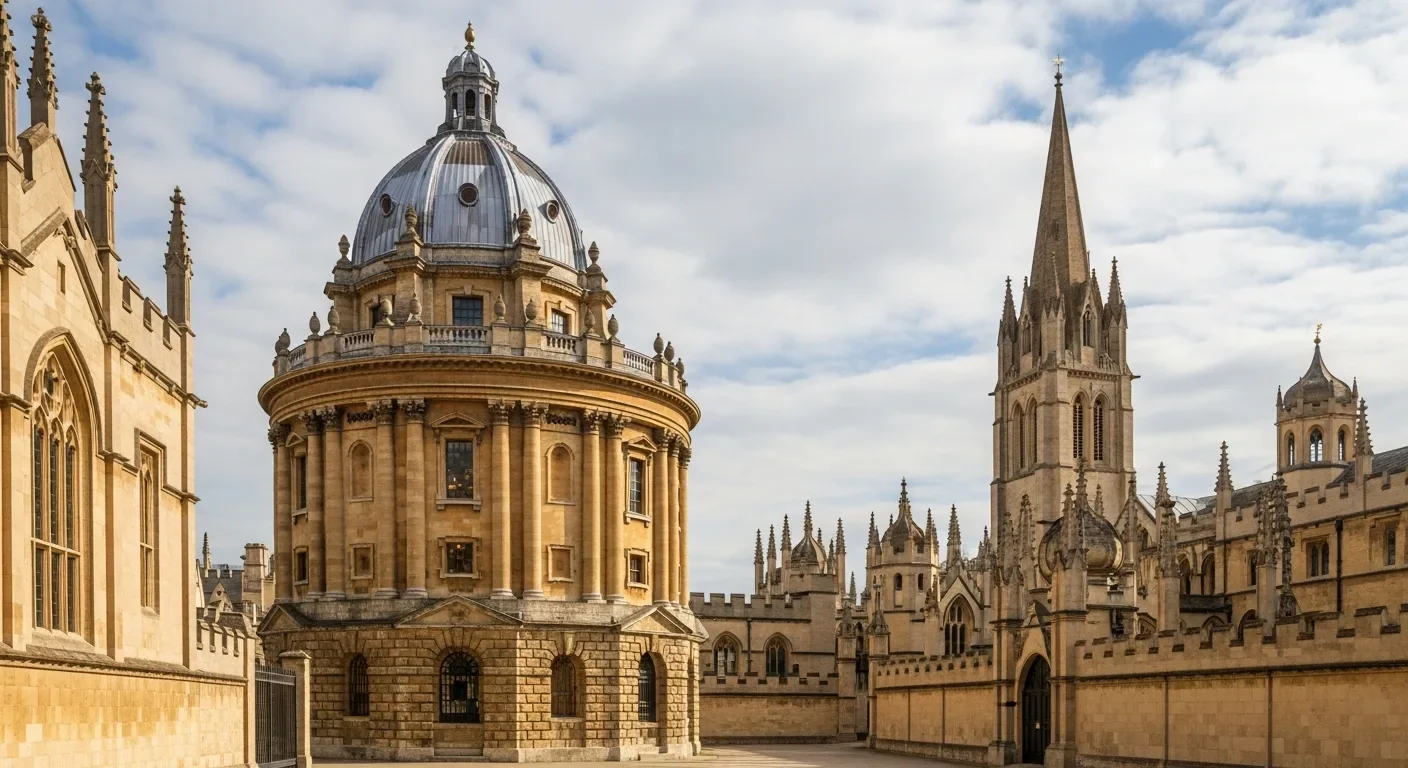
UCL is the third oldest university in England – after Oxford and Cambridge – and a founding member of the prestigious Russell Group, the British equivalent of the American Ivy League. The university’s official motto is “London’s Global University,” and it is one of only four UK universities consistently ranked in the global top 10.
In the QS World University Rankings 2025, UCL ranks 9th globally, surpassing institutions like Yale, Columbia, and Princeton. In the THE World University Rankings 2025, it holds the #22 position. However, it’s the subject-specific rankings that truly highlight UCL’s strengths: Architecture (#3 worldwide) at The Bartlett School, Education (#1 worldwide) at the UCL Institute of Education, Archaeology (#3 worldwide), Medicine, Law, and Computer Science, all within the global top 20. In the Research Excellence Framework (REF) 2021 assessment, UCL had the largest volume of research rated as “world-leading” among all UK universities.
What sets UCL apart from other top 10 universities is the breadth of its offerings. Imperial College is a powerhouse in STEM but doesn’t offer humanities or law. LSE dominates in social sciences but lacks medicine or engineering. UCL has everything – from architecture and philosophy, through medicine and computer science, to law and anthropology. If you don’t want to confine yourself to a single field, UCL is the only university in London that offers you a full spectrum of world-class disciplines. You can find more about the British education system in our guide to studying in the UK.
UCL Admissions Timeline 2026/2027
UCAS System – Key Dates for International Applicants
Source: UCAS.com, UCL Admissions 2025/2026
UCL Admissions – UCAS Process Step-by-Step
Admissions to UCL are handled through the central UK system, UCAS (Universities and Colleges Admissions Service) – similar to national application systems in many countries, but covering all universities in the UK. Compared to Oxbridge, the process is simpler and less stressful: for most programs, UCL does not conduct interviews or additional entrance exams. The decision is based on your written application, which is a significant advantage for international applicants who don’t need to travel to London for an interview.
Through UCAS, you can apply for a maximum of 5 programs – at UCL and/or other UK universities. The UCAS application fee is £28 (regardless of the number of choices). Your application consists of four elements: personal and educational details, predicted or achieved exam results, a Personal Statement (a motivational essay up to 4000 characters), and an academic reference from a teacher.
The Personal Statement is an absolutely crucial part of your UCL application. UCL clearly communicates that it seeks students with a deep, authentic interest in their chosen subject, not generic candidates with a long list of extracurricular activities. Approximately 80% of your essay should focus on your academic passion: books you’ve read, projects you’ve undertaken, scientific articles that have inspired you, Olympiads, and competitions. Be specific – instead of writing “I’m interested in physics,” write “Penrose’s article on singularities in Physical Review Letters prompted me to independently study topology in the context of general relativity.” Demonstrate critical thinking: not just what you know, but how you think and question.
Several programs have additional requirements beyond the standard UCAS application. Medicine (MBBS) requires taking the UCAT (University Clinical Aptitude Test), an earlier application deadline (October 15), an MMI-style interview, and documented healthcare experience. Architecture at The Bartlett School requires a design portfolio and an interview to present it. Fine Art at Slade School also requires a portfolio and interview (October 15 deadline). However, most programs – from Law and Economics, through Computer Science and Philosophy, to History and Psychology – rely solely on the UCAS application without additional steps.
Remember to check the conversion of Polish Matura results – our separate guide explains how your grades translate into foreign systems, including UK band requirements.
UCL Admissions Requirements – System Comparison
Polish Matura | IB | A-levels – Minimum Requirements for 6 Most Popular Programs
| Program | Polish Matura (Extended) | IB (Points) | A-levels | IELTS | Difficulty |
|---|---|---|---|---|---|
| MBBS Medicine | 85–90%+ (Chemistry + Biology) | 39 (HL 6,6,6) | AAA | 7.5 (Advanced) | Very High |
| BSc Economics | 85–90%+ (including Mathematics) | 39 (HL 6,6,6) | AAA | 7.0 (Good) | High |
| LLB Law | 85–90%+ | 39 (HL 6,6,6) | AAA | 7.5 (Advanced) | High |
| MEng Computer Science | 85–90%+ (including Mathematics) | 40 (HL 6,6,6) | A*AA | 6.5 (Standard) | High |
| BSc Architecture | 80–85%+ | 36 (HL 5,5,5) | AAB | 6.5 (Standard) | Medium-High |
| BA Philosophy | 80–85%+ | 38 (HL 6,6,6) | AAA | 7.5 (Advanced) | Medium-High |
Source: UCL Admissions 2025/2026, UCL Undergraduate Prospectus. Indicative thresholds: UCL does not publish cut-off scores, requirements may vary.
UCL applies three levels of English language requirements depending on the program: Standard (IELTS 6.5, min. 6.0 in each component), Good (IELTS 7.0, min. 6.5), and Advanced (IELTS 7.5, min. 6.5). Programs such as Law, English, and History require the Advanced level, while STEM subjects typically require Standard or Good. Unsure which certificate to choose? Read our comparison TOEFL vs IELTS – which certificate for studies in Europe. It’s worth starting exam preparation in advance: the our TOEFL app platform offers full practice tests with AI feedback to help you achieve the scores required by top universities.
UCL Study Programs – What to Study?
UCL offers over 440 undergraduate programs across 11 faculties, making it one of the broadest offerings in the UK. It is not a university with a single dominant discipline like Imperial (STEM) or LSE (social sciences); UCL boasts strength on many fronts simultaneously. Here are the programs that stand out most and most frequently attract international applicants.
Architecture, The Bartlett School of Architecture is undoubtedly UCL’s most iconic faculty and one of the most renowned architecture schools in the world: #3 in the QS rankings. The BSc Architecture (ARB/RIBA Part 1) program is a three-year course combining design, technology, and critical theory. Students work in small groups (design studios) under the guidance of practicing architects and internationally acclaimed researchers. The Bartlett is known for its avant-garde approach; here, you don’t design traditional buildings but explore parametric structures, biomaterials, and digital fabrication. A portfolio is crucial for application, and the interview is an opportunity to showcase your spatial thinking.
Law: UCL Faculty of Laws is one of the oldest and most respected law faculties in England, with a tradition tracing back to the university’s spiritual father, Jeremy Bentham, the father of utilitarianism. The LLB Bachelor of Laws program is academically rigorous, with a strong emphasis on comparative and international law. If you plan a career in international law firms like Clifford Chance, Linklaters, Freshfields, or Allen & Overy, UCL Laws offers one of the best pathways in the UK. It requires IELTS 7.5 (Advanced) and results at the AAA / 85–90% level from the extended Matura exam.
Medicine: UCL Medical School offers a six-year MBBS Medicine program affiliated with several leading London hospitals, including University College London Hospitals (UCLH) and the renowned Great Ormond Street Hospital for Children. Admissions are demanding – UCAT, MMI interview, clinical experience – but UCL Medical School provides some of the best prospects in British medicine. If you’re considering medicine in the UK, also compare the offerings of King’s College London, which has strong nursing and medicine programs.
Computer Science: UCL Computer Science holds historical significance beyond the university’s walls: in 1973, UCL became the first European node of ARPANET, the precursor to today’s internet. Its BSc and MEng Computer Science programs consistently rank in the UK top 10. It requires A*AA (with Mathematics) or IB 40 – thresholds are high, but graduates go on to work at Google, DeepMind, Meta, Amazon, and London fintech companies.
Economics: UCL Department of Economics is a faculty with a strong emphasis on quantitative methods and empirical economics. In REF 2021, the department achieved some of the highest research ratings in the UK. The BSc Economics program requires strong mathematics results (AAA in A-level Mathematics or 85%+ in the extended Matura exam) and prepares students for careers in central banks, financial institutions, and economic consulting.
Humanities and Social Sciences are UCL’s quiet giants. Philosophy (top 10 in the UK, analytical and continental traditions), Archaeology (#3 worldwide in QS: UCL Institute of Archaeology is a global leader), English (one of the oldest departments in England), and Psychology (BPS accreditation, strong research background) – each of these disciplines offers world-class programs, often overshadowed by more “high-profile” fields like medicine or computer science.
Top 6 UCL Departments – Global Rankings
Source: QS World University Rankings by Subject 2025, REF 2021, UCL
Costs of Study and Living in London
Let’s be honest: studying at UCL is a significant financial investment. Following Brexit, Polish students are treated as international students, meaning tuition fees are many times higher than for UK citizens. This is a fundamental change compared to the situation before 2021, when Polish students paid £9,250 annually – now, fees start from £28,500.
Tuition fees at UCL vary by faculty. Humanities and social sciences are £28,500/year, Law and Economics: £31,100/year, STEM and Computer Science: £35,000/year, Architecture at The Bartlett: £35,000/year, and Medicine (MBBS): £40,000/year. These amounts are comparable to Imperial College (£36,700–£49,500) and higher than at King’s College London (£25,000–£42,000).
In addition to tuition, there are living costs in London, one of the most expensive cities in the world. UCL student accommodation (single room) ranges from £9,000–£15,000 annually depending on location and standard. Food, transport (Student Oyster Card with a 30% discount), academic materials, and daily expenses add another £7,000–£10,000 annually. The total annual cost for an international student therefore amounts to £44,500–£65,000. Three years of undergraduate study will cost approximately £133,500–£195,000.
Compare this to CBS in Copenhagen, where tuition for EU citizens is 0 EUR, and annual living costs are 13,000–18,000 EUR: the difference is colossal. Even European universities with tuition fees, like Bocconi (14,000 EUR) or Maastricht University (2,500 EUR), are many times cheaper. But UCL offers something that continental European universities cannot: a globally recognized brand on par with the Ivy League, plus direct access to the London job market – the largest in Europe.
Annual Costs at UCL – International Students 2025/2026
Tuition + Living Costs in London (in GBP)
Source: UCL Fee Schedule 2025/2026, UCL Student Budget Guide. Figures rounded.
Additional costs to remember include: the UCAS application fee (£28), the Student Visa (£490 + Immigration Health Surcharge £776/year), and a tuition fee deposit after accepting an offer. The Student Visa grants you the right to work up to 20 hours per week during term time and full-time during holidays. After graduation, you can apply for the Graduate Route Visa – allowing 2 years of work in the UK without needing an employer sponsor, which is a huge advantage.
Scholarships and Financial Aid
Let’s be realistic: most international students at UCL do not receive a scholarship covering full tuition. However, UCL offers several scholarship programs that can significantly reduce the financial burden, and it’s worth applying for every one you qualify for.
The UCL Global Undergraduate Scholarship is UCL’s flagship scholarship program for non-UK students. Value: up to £10,000/year to cover part of the tuition fees, awarded for the entire duration of studies (3–4 years) provided good academic standing is maintained. Criteria include outstanding academic merit and financial need. The application is automatic: you do not need to submit a separate application; UCL considers you when you submit your UCAS application. The number of scholarships is limited (several dozen annually), but £10,000 per year for three years totals £30,000 – a substantial amount.
The Denys Holland Scholarship is one of UCL’s most prestigious scholarships: £10,000/year for living costs, dedicated to students who would otherwise be unable to study at UCL without financial assistance. It requires demonstrating community engagement, a separate application form, and an interview. The deadline is typically in March of the year studies commence.
Many departments also offer Departmental Scholarships – The Bartlett School has scholarships for architecture students, the Faculty of Laws for law students, and the Engineering Faculty for engineers. Amounts and conditions vary, so check the specific department’s website.
Among external funding sources, it’s worth considering Polish foundations: the Educational Enterprise Foundation, the Stefan Batory Foundation, and the NAWA program offer grants for studying abroad. Chevening Scholarships, a prestigious UK government scholarship, primarily target postgraduate studies, but are worth knowing for the future. Practical advice: apply for every scholarship you qualify for; even partial funding of £2,000–3,000 annually makes a huge difference over three years of study. You should also check current scholarship opportunities on the our SAT app platform.
UCL vs Imperial vs King's College London Comparison
Three Top London Universities – Key Differences for International Applicants
| Criterion | UCL | Imperial College | King's College London |
|---|---|---|---|
| QS Ranking 2025 | #9 | #2 | #40 |
| Profile | Comprehensive: STEM, Humanities, Law, Medicine, Architecture | STEM: Engineering, Sciences, Medicine, Business | Comprehensive: Law, Medicine, Humanities, Social Sciences |
| Strengths | Architecture (#3), Education (#1), Archaeology, Medicine, Computer Science | Engineering (#7), Computer Science, Physics, Chemistry, Business | Law, Medicine, Nursing (#2 in UK), Theology, War Studies |
| Location | Bloomsbury (Central London, next to British Museum) | South Kensington (Elegant district, next to Hyde Park) | Strand / Waterloo (On the Thames, next to Somerset House) |
| Atmosphere | Liberal, progressive, artistic, highly international | Intense, technical, ambitious, less diverse | Traditional, central, close to London life, friendly |
| Tuition (Int.) | £28,500–£40,000 | £36,700–£49,500 | £25,000–£42,000 |
| Acceptance Rate | ~55% | ~45% | ~60% |
| Number of Students | ~48,000 | ~22,000 | ~40,000 |
| Interviews | Only Medicine, Architecture, Fine Art | Most STEM programs | Only Medicine, Nursing |
| Unique Feature | Broadest range of programs, pioneer of equality in education | STEM focus, close to the City (finance) | Best location (Strand on the Thames), strong medicine |
Source: QS World University Rankings 2025, official university data, UCAS 2024
Choose UCL if you are interested in humanities, architecture, education, law, or wish to combine different disciplines at one university. You value an international, liberal atmosphere and the broadest range of programs in London. UCL is also the best choice if you prefer not to go through interviews – for most programs, the decision is based solely on your UCAS application.
Choose Imperial if your passion lies in engineering, computer science, natural sciences, or technological business. You are looking for an intense, demanding STEM-focused environment with strong ties to the City of London. Imperial has a higher QS ranking (#2) but a significantly narrower range of programs. Read our guide to Imperial College London.
Choose King’s if you are interested in law, medicine, political science, theology, or War Studies (a unique KCL specialization). You value the best location in London (campus on the Thames) and slightly lower costs. Check out our guide to King’s College London.
Student Life – Bloomsbury and London
UCL’s campus is located in Bloomsbury, a historic district in the very heart of London, nestled between King’s Cross, Euston, and Tottenham Court Road. It’s one of the most intellectual areas in the city: Virginia Woolf and the Bloomsbury Group once discussed literature and art in the same cafes where UCL students now sit with their laptops. The British Museum is literally around the corner; you can enter for free between lectures to admire the Rosetta Stone or the Parthenon frieze. The British Library – the world’s largest library – is a 10-minute walk away and offers ideal study conditions. The West End with its theatres is a 15-minute stroll. Regent’s Park – a beautiful park for relaxation and jogging – is 10 minutes from campus.
Unlike Oxford or Cambridge, UCL does not have a college system and is not a walled, self-contained campus. University buildings blend with cafes, bookstores, and galleries: UCL is woven into the fabric of the city. This is both an asset (unlimited access to everything London offers, Europe’s largest market for internships and part-time jobs) and a challenge (lacking the intimate, enclosed community provided by Oxbridge colleges).
UCL Students’ Union (UCLU) is one of the most active student organizations in the UK: over 300 clubs and societies, ranging from debates and sports to specialized academic groups. The UCL Polish Society organizes regular meetings, events, and support for newcomers, with dozens of new Polish students joining UCL each year. Sports at UCL are excellent: Bloomsbury Fitness, pitches in Shenley, teams in every discipline. UCL also boasts vibrant student media: the Pi Media newspaper, Rare FM radio, and numerous volunteering programs.
UCL guarantees accommodation in student halls to all first-year students who apply on time. Halls are spread across London: Ramsey Hall in Bloomsbury (right by campus), Ifor Evans Hall in Camden, Campbell House in King’s Cross (modern studio), John Tovell House in Hackney (more affordable). Prices range from £180 to £350 per week. In subsequent years, most students rent privately: popular areas include Holloway, Camden, Hackney, and Stratford. London is known for its diverse international communities, so you’ll find a variety of shops, restaurants, and cultural centers within easy reach.
UCL Graduate Career Prospects
Key Employment and Earnings Data
Source: UCL Careers Service, Graduate Outcomes Survey 2023/2024, QS Graduate Employability Rankings 2024
Student Visa – How to Study at UCL After Brexit
Following Brexit, Polish students need a Student Visa (formerly Tier 4) to study in the UK. The process is bureaucratic but well-documented and should not pose problems if planned in advance.
After accepting a UCL offer and paying a deposit, you will receive a CAS (Confirmation of Acceptance for Studies), a document essential for your visa application. You apply online at gov.uk no earlier than 6 months before your course starts. You must prove you have sufficient funds for your first year’s tuition fees plus £1,334/month for living costs for 9 months (total £12,006 for maintenance). You then book an appointment at a VFS center to provide your biometric data and pay the Immigration Health Surcharge (£776/year), which grants access to the NHS, the UK’s public healthcare service. The visa is usually issued within 3–4 weeks. Total cost: £490 for the visa plus the IHS for the entire study period.
With a Student Visa, you can work up to 20 hours per week during term time and full-time during breaks. After graduation, you can apply for the Graduate Route Visa – allowing 2 years of work in the UK without needing an employer sponsor. This is a significant advantage UCL offers over universities in countries that do not provide such generous post-study work options. You can read more about studying in the UK for international students in our guide to studying in the UK.
Summary – Who is UCL For?
University College London is a university that combines something rare in British education: the prestige of a global top 10 institution with a broad, comprehensive range of programs and a relatively high acceptance rate. You don’t have to go through interviews for most programs. You don’t have to choose between humanities and STEM – you can have both. And you study in the very heart of London: a city that is simultaneously Europe’s financial, cultural, and technological hub.
UCL is not for everyone. If cost minimization is the priority: continental European universities (ETH Zurich, Sciences Po, CBS Copenhagen) offer comparable quality for a fraction of the price. If you’re looking for the intimate community of colleges, Oxford and Cambridge will give you what UCL cannot. But if you want a top 10 university in cosmopolitan London, with the broadest range of programs, without the stress of interviews, and with a two-year post-study work right, UCL is one of the best choices in the world.
Next Steps
- Check your program’s requirements on the official website ucl.ac.uk – each program has specific requirements regarding subjects, grades, and IELTS level.
- Start preparing your Personal Statement in the summer before your final year of school: this is a crucial part of your application. Read books, academic articles, and keep notes on what inspires you in your chosen subject.
- Take IELTS or TOEFL at the required level: prepare with our TOEFL app, which offers full practice tests with AI feedback. Unsure which test to choose? Read our TOEFL vs IELTS guide.
- Submit your UCAS application by January 29 (or October 15 if applying for Medicine/Fine Art). Learn more about converting Polish Matura results.
- Apply for scholarships – UCL Global Undergraduate Scholarship (automatic), Denys Holland Scholarship (separate application), and departmental scholarships.
- Plan your funding – check Polish foundations, NAWA programs, and opportunities on our SAT app.
- After acceptance, visa and accommodation, start the visa process as soon as possible, and apply for accommodation on time (guaranteed for first-year students).
Also check out our other guides to UK universities: Oxford, Cambridge, Imperial College London, LSE, King’s College London, University of Edinburgh, and University of Warwick. Good luck!
Article updated: February 2026. Information on tuition fees and requirements pertains to the 2025/2026 academic year. Always check the latest data on the official website ucl.ac.uk. Preparation for TOEFL and IELTS language exams is available at our TOEFL app.