€300-750
Monthly room in a shared flat
€300-550 outside Milan; €500-750 in Milan
Best student cities in Italy 2026: Bologna, Milan, Rome, Turin, Padua, Florence. Rent €300-750/mo, mensa meals €2-5, the real cost city by city.

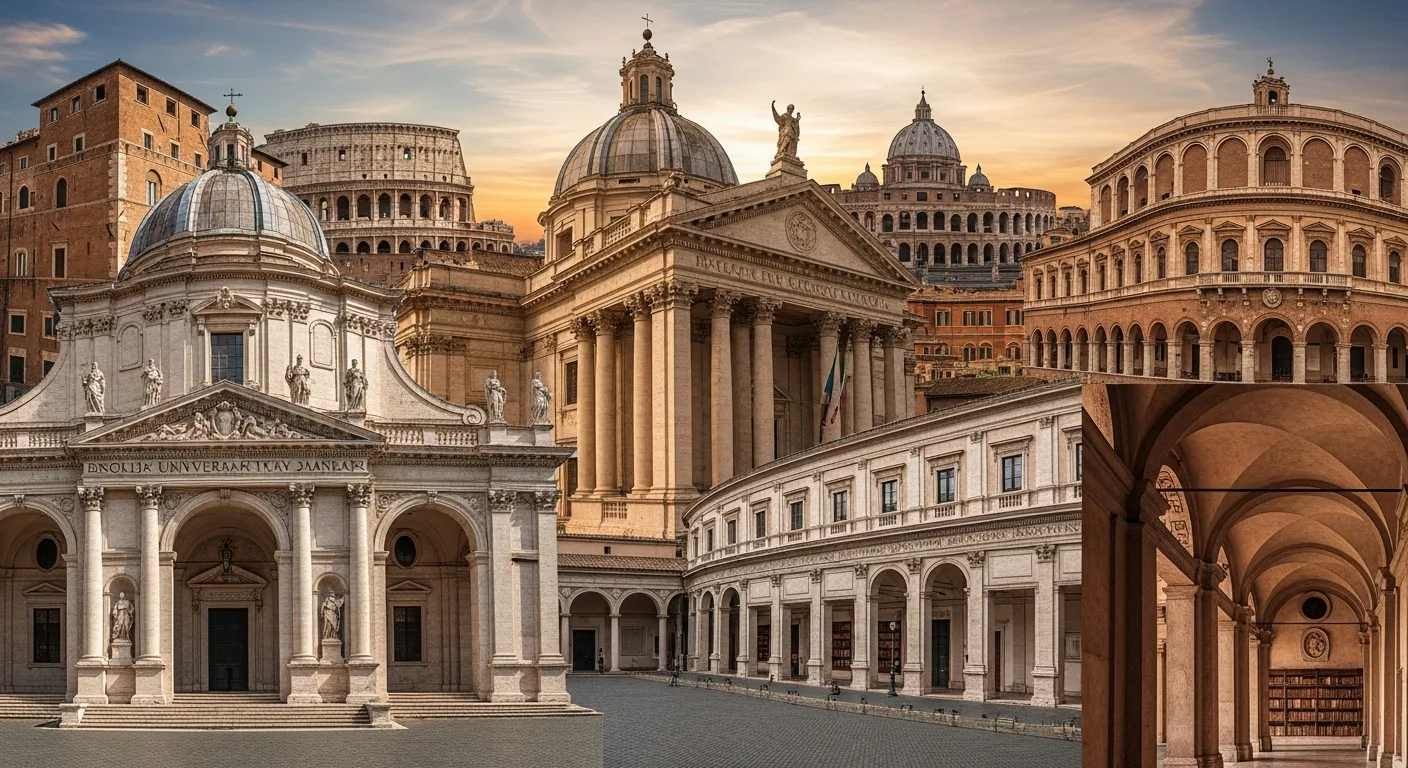
Photos: Wikimedia Commons
It is the second week of October in Bologna, and the porticoes along Via Zamboni are doing what they have done for nine centuries: funnelling students between faculties, bars and bookshops without anyone getting wet. A first-year from Lagos is reading a course outline on the steps of a sixteenth-century palazzo; two Erasmus students from Spain are splitting a €6 plate of pasta al ragù; a PhD candidate is heading to the mensa for a full lunch that will cost him €4. None of them lives more than fifteen minutes’ walk from their faculty, because in Bologna the university is not a campus you commute to - it is the city. Choosing where to study in Italy is, more than in almost any other country, a choice of city as much as institution. The university sets your degree; the city sets your life.
Here is the bottom line. Italy’s best student cities split into three tiers by cost and character. The value-and-vibe leaders - Bologna, Padua, Pisa and Naples - give you a top-150 university and a true student-town life for €600-900 a month. The career capitals - Milan and Rome - cost more (€850-1,500 and €750-1,250) but anchor the English-taught programmes and the graduate job market. And the specialists - Turin, Florence, Trento and Venice - each own a niche, from automotive engineering to art history. Across all of them, two numbers stay constant: a room in a shared flat runs €300-750, and the university mensa serves a full meal for €2-5. This is a cluster of our complete guide to studying in Italy; read that for the ISEE tuition system, the TOLC and IMAT entry tests and the visa, and read this to decide which city.
I will rank the ten cities below the way I actually advise families: by what they cost, what they are known for academically, and what they are like to live in. Where we publish a dedicated English guide to a city’s flagship university, the name links to it; otherwise it links to that university’s full profile in our Atlas.
Source: official university fee and accommodation pages, regional DSU agencies, and living-cost estimates averaged across student cities, 2025/26.
The table below is my curated ordering for an international student weighing where to live, not a ranking of universities. The “rank” weighs the things that actually decide a place to spend three to five years: how good the anchor university is, what it costs to live there, whether you can study in English, and how the city treats a student. What each city is known for matters more than its number.
| Rank | City | Anchor university · monthly budget · known for |
|---|---|---|
| 1 | Bologna | University of Bologna · €650-900 · oldest university in the world, true student town, best food in Italy |
| 2 | Milan | Politecnico di Milano & Bocconi · €850-1,500 · careers, English-taught study, finance and design |
| 3 | Rome | Sapienza & LUISS · €750-1,250 · biggest university in Europe, monuments, IMAT medicine |
| 4 | Turin | Politecnico di Torino & University of Turin · €750-1,100 · automotive and aerospace engineering, cheaper than Milan |
| 5 | Padua | University of Padua · €600-850 · 1222, Galileo's chair, walkable, 30 minutes from Venice |
| 6 | Florence | University of Florence · €800-1,200 · art history, architecture, Renaissance city, design |
| 7 | Pisa | University of Pisa · €600-900 · sciences and mathematics, twinned with the elite Scuola Normale |
| 8 | Naples | Federico II · €600-900 · cheapest major uni city, Apple Developer Academy, historic (1224) |
| 9 | Trento | University of Trento · €650-950 · top quality of life, computer science, Alpine setting |
| 10 | Venice | Ca' Foscari Venezia · €800-1,200 · languages, economics, art and architecture in a unique city |
| Source: College Council Atlas dataset and dedicated guides; official university websites 2025/26; living-cost estimates averaged across student cities. | ||
If you asked me to send a student to one Italian city blind, it would be Bologna. La Dotta (“the learned”), La Grassa (“the fat”) and La Rossa (“the red”) - learned for the University of Bologna, founded in 1088 and the oldest in the world; fat for the food (this is the home of tagliatelle al ragù, tortellini and mortadella); red for the rooftops and the politics. Roughly a quarter of the city’s population studies, which means the whole economy is built around students: cheap trattorie, late libraries, a deep rental market and a nightlife on Via Zamboni and around Piazza Verdi that does not require a car or a fortune.
The practical numbers work in your favour. A room in a shared flat runs €350-550, an all-in monthly budget is €650-900, and Emilia-Romagna’s regional scholarship agency ER-GO runs one of Italy’s most generous DSU packages - tuition exemption, a living stipend and subsidised housing for students who qualify on ISEE and merit. The University of Bologna accepts the SAT from around 950, the lowest threshold in Europe, and runs growing English bachelor’s and master’s tracks alongside its Italian catalogue. The food alone shifts the budget math: in a Bologna mensa, five full lunches cost less than one sit-down meal in London.
Milan is the opposite proposition: the most expensive city, the most international, and the one with the clearest payoff. It anchors two of Italy’s strongest institutions - Politecnico di Milano, which teaches all of its engineering masters in English and sits inside the global top 20 for engineering and design, and Bocconi, the private business school whose graduates report employment above 95% and finance and consulting starting salaries of €45,000-60,000. The comprehensive University of Milan (Statale), Milano-Bicocca, Cattolica and the medical Vita-Salute San Raffaele round out the densest cluster of universities in the country.
The cost is the catch. A room runs €500-750, an all-in monthly budget is €850-1,500, and the rental market is brutal in September. What you get for it is the strongest part-time job market in Italy (finance, fashion, tech, English-language support), the largest international community, and the country’s clearest launchpad into McKinsey, UniCredit, Ferrari, Leonardo and the luxury houses. Navigli aperitivo - a Spritz and a buffet for €8-12 - is effectively dinner, and Lake Como is an hour away. Milan is where you study if outcomes and English-taught programmes outrank budget.
Rome sets Sapienza - the largest university in Europe by enrolment and a world leader in classics, archaeology and physics - down inside a living open-air museum, where your walk to a lecture passes the Pantheon or the Baths of Diocletian. It is also home to LUISS Guido Carli, the private university that quietly feeds Italian public life, law and politics. Sapienza runs the six-year English Medicine and Surgery (MEDTECH) programme, admitted through the IMAT, and accepts the SAT from around 960 on English-taught tracks.
Rome sits in the middle on cost: a room runs €400-650, an all-in monthly budget €750-1,250, with food and transport 15-20% cheaper than Milan. Most students live in San Lorenzo (cheap bars and pizza al taglio next to the Sapienza campus), Trastevere (evening aperitivo) or Pigneto, and the Ostia beaches are thirty minutes away by metro. The trade-off is real: Rome’s bureaucracy is the slowest in a country famous for slow bureaucracy, and the job market leans toward tourism and the public sector rather than the corporate recruiting Milan offers. For culture, history and value, though, no other capital in Europe competes.
Turin is the smart-money pick. It pairs Politecnico di Torino - engineering, automotive and aerospace, feeding the Stellantis and Piedmont industrial cluster - with the comprehensive University of Turin, at €750-1,100 a month, meaningfully cheaper than Milan two hours away. The Piedmont DSU agency EDISU funds well, and the city’s automotive and tech base feeds internships.
Padua is one of Italy’s most underrated student towns. The University of Padua has run continuously since 1222 - Galileo held its chair of mathematics for eighteen years - and the city is small, walkable and €600-850 a month, with rooms at €300-500 and Venice thirty minutes away by train. Pisa offers a similar bargain (€600-900): the University of Pisa is strong in sciences and mathematics and shares a city with the ultra-selective Scuola Normale Superiore and Sant’Anna.
Florence trades some of that value for one of the world’s great cities. The University of Florence is comprehensive and research-strong, and the city is unmatched for art history, architecture, design and the Renaissance humanities - at €800-1,200 a month, with a large international and study-abroad community. Naples is the cheapest major university city in Italy at €600-900, which makes Federico II - founded by imperial charter in 1224 and now home to Apple’s first European Developer Academy - the best return on a student euro in the country, for those willing to learn some Italian.
At the smaller end, Trento consistently tops Italian quality-of-life surveys: the University of Trento is research-focused and strong in computer science and physics, in an Alpine setting at €650-950. And Venice is the wild card - Ca’ Foscari teaches languages, economics and art in a city like nowhere else on earth, though rooms are scarce and the tourism economy pushes costs up to €800-1,200 a month.
After the university itself, four variables decide whether a city fits you. Weigh them in this order.
One number rarely makes it onto the brochures and it deserves to: the mensa. Every public university runs canteens serving a full meal - primo, secondo, contorno and fruit - for €2-5 with a student card, and the local mercato rionale markets undercut supermarkets on fresh produce. The practical effect is that food is rarely the line that breaks an Italian student budget; rent is. Choose your city as if rent is the only number that varies, because it nearly is.
| City | Room (shared flat) | All-in per month | Best for |
|---|---|---|---|
| Bologna | €350-550 | €650-900 | Overall student life, food, value |
| Naples | €300-500 | €600-900 | Lowest cost, sciences, CS |
| Padua | €300-500 | €600-850 | Walkable town, near Venice |
| Pisa | €300-500 | €600-900 | Sciences, maths, small-town life |
| Trento | €350-550 | €650-950 | Quality of life, computer science |
| Turin | €350-550 | €750-1,100 | Engineering, value vs Milan |
| Rome | €400-650 | €750-1,250 | Culture, Sapienza, IMAT medicine |
| Florence | €450-650 | €800-1,200 | Art, architecture, Renaissance city |
| Venice | €450-700 | €800-1,200 | Languages, art, unique setting |
| Milan | €500-750 | €850-1,500 | Careers, English programmes, finance |
Source: living-cost estimates averaged across student cities and official university accommodation pages, 2025/26. A regional student transport pass is around €22/month and the university mensa serves a full meal for €2-5. Rent depends on neighbourhood and timing - September is the hardest month to find a room.
The right to work is the same in every city, but the market is not. Non-EU students on a study residence permit can work up to 20 hours a week in term and full time during breaks, capped at 1,040 hours a year, with no separate work permit; EU students work without restriction. Milan has by far the strongest part-time market - finance, fashion, tech and English-language support - with Rome leaning toward tourism and Bologna offering a deep university-town economy. Typical wages run €8-12 an hour in hospitality and tutoring, €12-18 for university and research roles.
Scholarships are city-specific in a way that matters. The regional DSU (Diritto allo Studio Universitario) system - run by ER-GO in Emilia-Romagna (Bologna), DiSCo in Lazio (Rome) and EDISU in Piedmont (Turin) - bundles full tuition exemption, a living stipend of €2,000-5,500, near-free mensa meals and priority access to subsidised housing, awarded on ISEE and merit, with EU students qualifying on the same terms as Italians. Apply within the regional window, usually September - October. The full mechanics of ISEE, DSU and the national schemes live in the parent guide to studying in Italy.
Getting around is easy and cheap. Every university city offers a discounted student transport pass (around €22 a month), most student life happens within walking or cycling distance, and the high-speed rail network links Milan, Bologna, Florence and Rome in a couple of hours, so weekend travel between cities is realistic on a student budget. If you are comparing Italy with other continental options, our guides to studying in Germany and studying in the Netherlands set out where each system wins.
For most international students Bologna is the best overall student city in Italy: a quarter of its population studies, the University of Bologna (founded 1088) anchors a dense university-town economy, rooms run €350-550 a month, and it has arguably the best food scene in the country. Milan is the best choice for careers and English-taught study (Politecnico di Milano and Bocconi) but costs the most at €850-1,500 a month; Rome offers the deepest culture around Sapienza at €750-1,250; Turin, Padua, Florence and Pisa balance strong universities with lower rents. The right city depends on your field, budget and whether you study in English or Italian.
Naples is the cheapest major university city in Italy at roughly €600-900 a month all-in, which makes the University of Naples Federico II the strongest cost-to-quality pick in the country. Padua (€600-850, rooms €300-500), Pisa and Bologna (€650-900) are the next most affordable serious university towns. Milan is the most expensive at €850-1,500 a month, with Rome close behind. In every city the university mensa serves a full meal for €2-5, so food rarely breaks an Italian student budget - rent does.
Milan has the deepest English-taught catalogue: Politecnico di Milano teaches all its engineering masters in English and Bocconi runs nearly its entire portfolio in English. Rome (Sapienza’s English MEDTECH medicine via IMAT, plus LUISS) and Bologna (growing English bachelor’s and master’s tracks) follow. Italy offers more than 600 English-taught programmes overall, roughly three-quarters at master’s level, so check the specific programme page rather than assuming a whole city teaches in English.
Monthly living costs range from about €600-900 in Bologna, Padua, Pisa and Naples to €850-1,500 in Milan, with Rome (€750-1,250), Turin (€750-1,100) and Florence (€800-1,200) in between. The biggest single line is rent: a room in a shared flat runs €300-550 outside Milan and €500-750 in Milan. The university mensa serves a full meal (primo, secondo, contorno, fruit) for €2-5 with a student card, and a regional student transport pass is around €22 a month.
Milan is better for careers, English-taught study and a cosmopolitan, fast-paced life - it hosts Italy’s finance, fashion, consulting and engineering employers, plus Politecnico di Milano and Bocconi - but it is the most expensive city at €850-1,500 a month. Rome is better for culture, history and value, wrapping Sapienza (Europe’s largest university by enrolment) in the densest concentration of monuments in the Western world at €750-1,250 a month. Choose Milan for outcomes and English programmes; choose Rome for the experience and a lower budget.
You can study in English in Milan, Rome and Bologna, but daily life outside Milan genuinely benefits from Italian. Milan has the most English-friendly shops, banks and offices; in Bologna, Padua, Turin, Florence and especially Naples, learning Italian to A2 - B1 makes renting a flat, opening a bank account and dealing with the comune far easier. Most international students who stay more than a semester end up learning conversational Italian regardless of their programme language.
Choosing a city is the easy half; getting admitted to the university that anchors it is the rest. Italy rewards the SAT more than almost any European system, and at the lowest thresholds in Europe - Bologna from around 950, Sapienza from 960 - so our SAT app runs the full digital SAT with adaptive practice and analytics, and our TOEFL app delivers full TOEFL iBT mocks with AI-graded speaking and writing, the language certificate every Italian university requires.
The harder judgement is fit: whether Milan’s outcomes justify its rent for your budget, whether a low ISEE makes Bologna or Padua unbeatable, and how to sequence the TOLC, IMAT, SAT, the visa and the permesso di soggiorno without missing a window. That is where we work with families directly. Register on College Council and you get every university, its exact admission requirements and a realistic read on getting in - run your profile through our chances engine to see where you stand. To explore on your own, our Atlas of universities holds the full Italian catalogue, every institution named above and thousands more, with the facts that matter.
City rankings reflect College Council’s curated judgement for international applicants, balancing academic strength, cost of living, English-taught access and student life - not a single published ranking. University profiles are drawn from College Council’s Atlas dataset of Italian higher-education institutions and our dedicated guides, cross-checked against the QS World University Rankings 2026. Living-cost figures (rent, mensa, transport) are averaged estimates across student cities and verified against official university accommodation and fee pages in June 2026; rent in particular varies sharply by neighbourhood and time of year, so confirm current figures locally before committing.