€2-7k
DSU regional scholarship stipend / year
Plus full fee waiver, free mensa meals, subsidised housing
Scholarships to study in Italy 2026: DSU regional grants (€2,000-7,000 stipend), MAECI €9,000 government awards, Invest Your Talent.

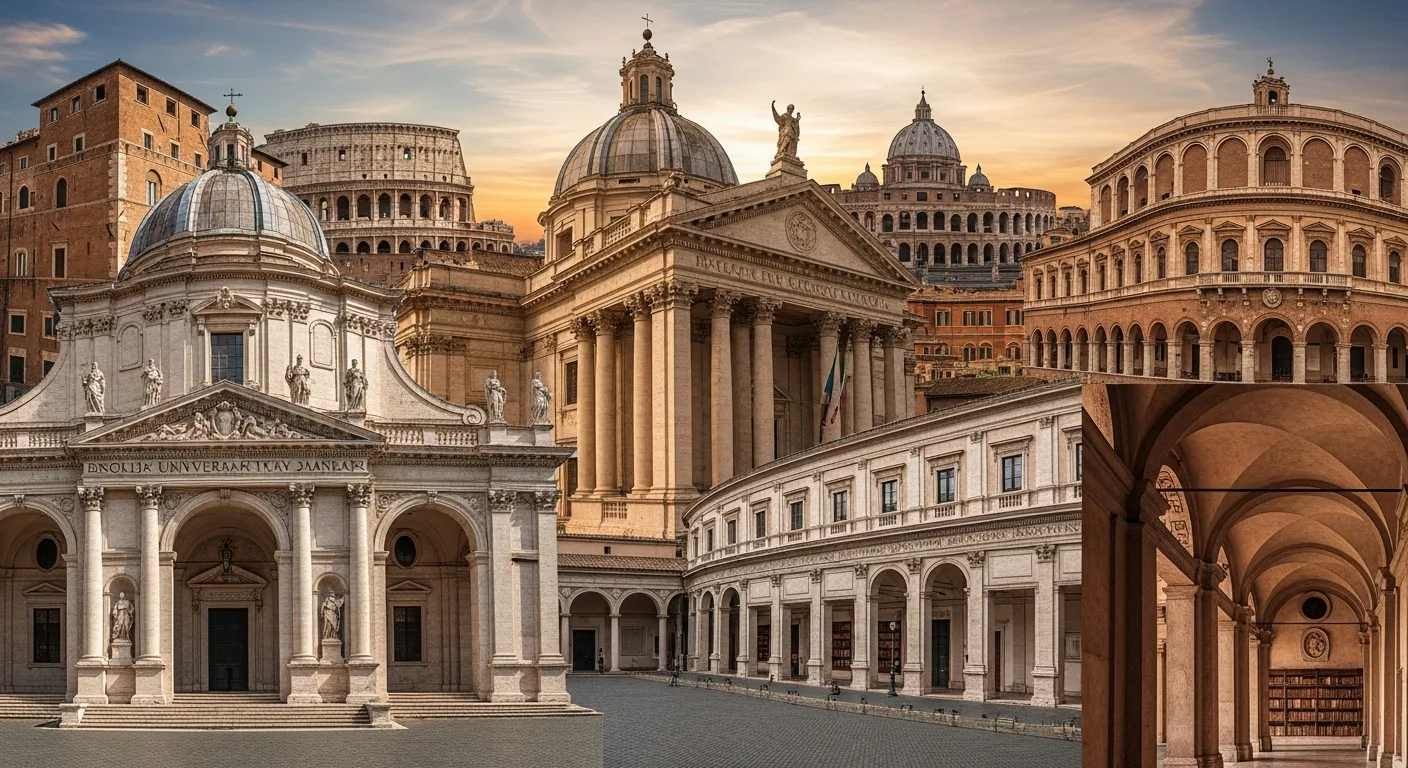
Photos: Wikimedia Commons
The September that Amara arrived in Bologna, she paid for nothing. Her tuition was zero - her family’s income, filed through ISEE Parificato, sat below the no-tax threshold. Her room in a university residence near Via Zamboni was subsidised by ER-GO, the regional study agency, and her meals at the mensa cost her nothing on a low-ISEE card. And every few months a payment landed in her new Italian bank account: a DSU stipend of just over €5,000 across the year. She had not won a single famous, named, glossy scholarship. She had filed two pieces of regional paperwork that almost nobody outside Italy talks about, and they turned a degree from a university founded in 1088 into something her family was, on balance, paid to let her attend.
Here is the bottom line. The most valuable scholarship money in Italy is not the famous government award - it is the regional DSU system, which combines a full tuition waiver, a living stipend of €2,000-7,000, free canteen meals and subsidised housing, awarded on income and merit, and open to international students on the same terms as Italians. Above it sit the national schemes: the MAECI Italian government scholarship pays a total of €9,000 for a nine-month grant plus health cover and a tuition waiver at participating universities, and Invest Your Talent in Italy funds emerging-market master’s students at roughly €1,000 a month with a paid internship. And the private universities - Bocconi, Politecnico di Milano, LUISS - run their own merit awards, the largest of which waive a full five-figure tuition bill. Across the College Council families we advise on Italy, the ones who come out furthest ahead are almost never the ones who chased a headline scholarship. They are the ones who treated ISEE Parificato and the DSU application as the real funding test.
This guide maps every layer of Italian student funding for international applicants: how the no-tax area zeroes your fee before any scholarship, how the regional DSU agencies (ER-GO, DiSCo, EDISU and the rest) actually pay you, which national and EU schemes are worth your time, what the private universities offer, and the one sequencing mistake that costs families thousands. It is the funding deep-dive that sits under our complete guide to studying in Italy - read that for the full system, and read our cheapest universities in Italy guide for the city-by-city cost arithmetic these scholarships sit on top of.
Source: regional DSU agency regulations 2025/26, national ISEE no-tax-area law, Italian Ministry of Foreign Affairs (MAECI), Invest Your Talent in Italy, Bocconi and Politecnico di Milano scholarship pages, College Council Atlas.
Most guides to scholarships in Italy publish a flat list of named awards. That hides how the system actually works, because Italian funding is built in layers that stack in a specific order, and the cheap, boring layers at the bottom are worth more than the famous ones at the top.
Layer 1 - ISEE and the no-tax area. Before you apply for any scholarship, your tuition is set by ISEE, the income-and-asset calculation public universities use to assign a fee band. National budget law fixes a no-tax area: a student with an ISEE at or below €22,000 (raised in stages from the original €13,000) pays no tuition at all - only the regional student tax and a €16 stamp duty, the €140-200 that gets quoted as the “€156 minimum.” This is not a scholarship and you do not “win” it; you qualify by filing ISEE Parificato correctly. It is the single highest-value piece of paperwork in the whole process, and it happens before any award.
Layer 2 - DSU regional scholarships. On top of the waived fee, the regional study agencies pay you to study: a living stipend, free meals, and a subsidised room. This is the workhorse, and it is where most international students leave money on the table.
Layer 3 - national and EU schemes. The MAECI government scholarship, Invest Your Talent in Italy, Erasmus+ and Erasmus Mundus. These are competitive, country-restricted or programme-restricted, and generally do not combine with a DSU award (they cover the same costs), so you choose the most generous single one.
Layer 4 - private-university merit awards. Bocconi, Politecnico di Milano, LUISS and Cattolica run their own scholarships, often steep, decided on application strength. These matter most at the high-fee private end where there is no ISEE relief.
The strategic move for almost every international student at a public university is the same: stack Layer 1 and Layer 2. Get your ISEE into the no-tax area, then win a DSU scholarship on top. That combination - a zeroed fee plus a paid stipend, free mensa and subsidised housing - is what makes an Italian public degree close to self-funding, and it is open to you as a foreign student.
The DSU (Diritto allo Studio Universitario) system is the right to higher education written into Italian law, and it is administered not nationally but by regional agencies, one per region, each with its own portal, deadline and amounts. The names matter because you apply to the agency for the region your university sits in:
A DSU award is a package, not a single grant. A successful applicant typically receives:
It is awarded on a blend of ISEE economic need and academic merit: you must be below an income ceiling and earn a minimum number of credits (CFU) each academic year to keep it. The point that international students miss is the eligibility one: EU students - including those who file a low ISEE Parificato - qualify on exactly the same terms as Italians. Non-EU students qualify too, provided they document their family’s foreign income and assets through ISEE Parificato at a CAF (Centro di Assistenza Fiscale) office in Italy.
The deadline is the trap. DSU applications open in a regional window, usually September to October, and they are filed separately from your university enrolment - a different portal, a different deadline, a different set of documents. Students who assume enrolling automatically considers them for a scholarship miss it entirely. In my experience advising families on Italy, the single most common avoidable mistake is treating DSU as something that happens automatically. It does not. A student with moderate family income who skips the DSU application leaves €3,000-7,000 a year unclaimed - it is the most under-claimed money in the Italian system, and the deadline does not reopen.
Above the regional layer sit the national awards, which are competitive, restricted and fully funded.
The Borse di Studio del Governo Italiano (MAECI) is the headline government scheme, run by the Ministry of Foreign Affairs and International Cooperation through its embassies and the Study in Italy portal. It pays a total of €9,000 for a nine-month grant, disbursed in three instalments to your Italian bank account, plus health insurance and a tuition waiver at participating universities (the exemption depends on each university’s own rules, so confirm it for your institution). It covers master’s degrees, PhDs, AFAM courses (arts, music and dance) and co-tutorship research projects, not bachelor’s degrees. Eligibility is by country: it is open to foreign citizens and Italians resident abroad from a list of designated countries that the ministry updates each year. The application window opens in spring, typically closing around April - May for the following academic year, through studyinitaly.esteri.it. It is renewable for a second year on multi-year courses if you meet the academic conditions.
Invest Your Talent in Italy (IYT), now in its eleventh edition for 2026/27, is the more targeted scheme: a master’s-level programme aimed at designated emerging markets - among them Azerbaijan, Colombia, Egypt, Ethiopia, Ghana, India, Indonesia, Iran, Kazakhstan, Mexico, Tunisia, Turkey and Vietnam - in fields such as engineering, economics, management, design and architecture. It funds roughly €1,000 a month (around €9,000 over nine months), a full tuition waiver, a free Italian-language course, and - the differentiator - a mandatory 3-4 month internship at an Italian company. For students from the eligible countries, IYT is one of the strongest value packages in Europe because it bundles funding with a work placement and a network.
Two honest caveats. First, both schemes are country-restricted: if your nationality is not on the current list, neither is open to you, and the list changes year to year, so check it before you build a plan around it. Second, the national awards generally do not combine with a DSU regional scholarship, because both cover tuition and living costs - you take the most generous single one. For a student from an eligible country, IYT or MAECI usually wins; for everyone else, the stacked no-tax-area-plus-DSU route is the better play.
Two EU schemes sit alongside, not instead of, the Italian ones, and they do combine with a home-university scholarship.
Erasmus+ funds exchange semesters: if you spend part of an Italian degree at a partner university, or come to Italy on exchange, you receive a monthly mobility grant (the amount depends on the country pairing) on top of whatever you already hold. Erasmus Mundus Joint Masters are fully funded two-year master’s degrees run by consortia of European universities, several of which include Italian partners; the scholarship covers tuition, travel and a monthly allowance, and it is one of the most generous awards in European higher education - but it is awarded by the consortium, not the individual university, and the competition is global.
Home-country funding is the layer applicants forget to check. Many countries run a national academic-exchange agency offering portable top-up funding that travels with you to Italy - Germany’s DAAD, Poland’s NAWA and Brazil’s CAPES are well-known examples, alongside several national merit funds - and these typically stack with an Italian award because they are paid by your home government, not the Italian one. The rule of thumb: anything paid by your home country or the EU usually combines; two Italian full awards usually do not.
At the public universities, ISEE and DSU do the heavy lifting and the fee is already near zero. At the private universities - where annual tuition runs €15,000-20,000 and there is no ISEE relief - the merit scholarships are what make the brand affordable, and the best of them are generous.
The Bocconi Merit Award is a full tuition-and-fees waiver worth around €12,000-13,000 a year (with free accommodation in a Bocconi residence for a limited number of recipients), and the Bocconi International Award covers full tuition for top international applicants; roughly a fifth of Bocconi students hold a merit scholarship of some kind. Because these are decided on application strength, the SAT/ACT scores and grades that win admission are the same ones that win the funding - there is no separate “scholarship test.” For the full picture on getting in, see our Bocconi University complete guide.
Politecnico di Milano runs the Roberto Rocca Project, funded through the Tenaris-Techint Group, which supports engineering students from selected emerging markets, alongside its own merit scholarships of €5,000-10,000 a year for high-performing international applicants. Its public ISEE tuition already starts at €156 at the lowest band, so a strong applicant can combine low public fees with a merit top-up - read the funding and admissions detail in our Politecnico di Milano study guide. LUISS Guido Carli and Università Cattolica del Sacro Cuore both award partial-to-full tuition scholarships on application strength.
Below is how the major awards compare. Treat it as College Council’s curated map of where the money is, not an exhaustive list; the public-route awards (no-tax area plus DSU) sit at the top because they are the most reliable for the widest set of international students.
| # | Scholarship / route | What it covers · who it's for |
|---|---|---|
| 1 | DSU regional scholarship (ER-GO, DiSCo, EDISU…) | Tuition waiver + €2,000-7,000 stipend + free mensa + subsidised housing · any public-uni student; EU on equal terms · need + merit |
| 2 | ISEE no-tax area (statutory) | €0 tuition below ISEE €22,000 (only regional tax + €16 stamp) · all public-uni students who file ISEE Parificato · need-based |
| 3 | Borse di Studio del Governo Italiano (MAECI) | €9,000 total (nine-month grant) + health cover + tuition waiver where offered · master's/PhD/AFAM/research from designated countries |
| 4 | Invest Your Talent in Italy | ~€1,000/month + tuition waiver + paid internship + Italian course · master's, ~13 emerging-market countries |
| 5 | Bocconi Merit / International Award | Full tuition-and-fees waiver (~€12,000-13,000/yr) + accommodation for some · top admitted applicants (private) · merit / application-strength |
| 6 | Polimi Roberto Rocca Project + merit | Funding for engineering from selected emerging markets; merit awards €5,000-10,000/yr |
| 7 | Erasmus Mundus Joint Masters | Full tuition + travel + monthly allowance · joint master's with Italian partner unis · global competition |
| 8 | Erasmus+ mobility grant | Monthly grant for exchange semesters · combines with other awards · all EU/partner students |
| 9 | Home-country funding (NAWA, CAPES…) | Portable top-up paid by your government · usually stacks with an Italian award |
| Source: regional DSU agency regulations, national ISEE law, MAECI / Study in Italy, Invest Your Talent in Italy, Bocconi & Politecnico di Milano scholarship pages, European Commission Erasmus+ 2025/26. Ordering is CC's curated priority for international applicants, not an official ranking. | ||
There is no single best scholarship in Italy; there is a best route for your situation, and it comes down to three questions.
Are you going to a public or a private university? At a public university, the no-tax area plus DSU is almost always the rational play - it is reliable, generous and open to internationals, and you do not need a famous award to make the degree close to free. At a private university (Bocconi, LUISS, Cattolica, San Raffaele), ISEE does not help; the merit scholarship is the whole game, and the strength of your application is what decides it.
Is your country on a designated list? If your nationality appears on the current MAECI or Invest Your Talent list, a fully funded national award becomes realistic - and IYT in particular, with its paid internship, is hard to beat. If your country is not listed, do not build a plan around the national schemes; concentrate on the public-route stack and home-country funding instead.
What is your family’s ISEE? A low ISEE unlocks both the no-tax area and the need-weighted half of DSU, and it is the difference between paying €4,000 and paying nothing. A higher ISEE narrows your options to the merit-only awards, where grades and test scores carry the decision.
Be honest about the trade-offs. The DSU stipend is real money but it is not lavish - €2,000-7,000 covers a meaningful slice of living costs, not all of them, and you must keep your credits up to renew it. The national awards are generous but competitive and country-gated. The private merit awards are the largest single sums, but they exist because the underlying tuition is high. And every one of these requires paperwork filed on a specific deadline, in Italian, often months before you arrive. The students who win are not the ones with the best stories; they are the ones who started the document collection early.
| If you are… | Best route | Realistic value |
|---|---|---|
| Low-income, public university | No-tax area + DSU regional scholarship | €0 tuition + €2,000-7,000 stipend + housing & meals |
| Master’s/PhD from a designated country | MAECI government scholarship | €9,000 grant + health cover + tuition waiver where offered |
| Master’s in engineering/economics, emerging market | Invest Your Talent in Italy | ~€9,000/yr + paid internship + tuition |
| Strong applicant, private university (Bocconi/LUISS) | University merit award | Full or partial tuition waiver (Bocconi ~€12,000-13,000/yr) |
| On exchange or a joint master’s | Erasmus+ / Erasmus Mundus | Monthly grant; Mundus = full ride |
Source: scheme regulations as cited; values are typical, not guaranteed, and depend on ISEE, country and programme.
Scholarships in Italy are lost on timing more than on merit. The mechanics run on a fixed calendar, and the windows do not reopen, so the work is in sequencing it correctly.
Start with ISEE Parificato six to eight months before the academic year. International families must gather certified, translated copies of parental tax returns, bank statements and property records, then file through a CAF office in Italy. This is the foundation: it sets your tuition band, qualifies you for the no-tax area, and supplies the income figure that DSU and any need-based award depend on. Get this wrong or late and every downstream scholarship is affected.
Apply for DSU within the regional September - October window, on the regional agency’s own portal (ER-GO, DiSCo, EDISU and the rest), separately from your university enrolment. For the national schemes, the calendar is earlier and different: MAECI applications run through the embassy and the Study in Italy portal with a spring deadline, usually April - May, and Invest Your Talent runs its own annual cycle - both for the following academic year, so you apply roughly a year out. Private-university merit awards are generally decided as part of, or just after, the admission decision, so the lever there is simply the strength of your application: the SAT/ACT and grades that get you in are the ones that win the funding.
A strong SAT sits underneath several of these. Italy accepts it as an entry route at the lowest thresholds in Europe - Bologna from around 950, Sapienza from 960, Politecnico di Milano around 1,240 - and at the private universities the same admission strength that wins your place drives the merit-scholarship decision. If the SAT is part of your plan, prepare on our SAT app, which runs the full digital SAT with adaptive analytics, and read our companion piece on whether the SAT is worth it for international students. For the English-language certificate every Italian university requires (typically IELTS 6.0+ or TOEFL iBT 80+, Bocconi 6.5+/93+), our TOEFL app runs full iBT mocks with AI-graded speaking and writing.
We built College Council to remove the two things that most often cost families an Italian scholarship: weak test preparation and a chaotic, last-minute process. Italy rewards the SAT more than almost any European system, and at the lowest thresholds, so our SAT app runs the full digital SAT with adaptive practice, and our TOEFL app delivers the full TOEFL iBT with AI-graded speaking and writing - the language certificate every Italian university requires. CC runs both directly; you prepare once and apply broadly.
The harder part is judgement: whether your family’s ISEE puts a public university within reach of near-zero cost, whether your country qualifies for MAECI or Invest Your Talent, and how to sequence ISEE Parificato, DSU, the national deadlines and the visa without missing a single window. That is where we work with families directly, on the same data that powers this guide. Register on College Council and you get every university, its exact admission requirements, and a realistic read on how to get in - run your profile through our chances engine to see where you stand. And if you want to explore first, our Atlas of universities holds the full Italian catalogue, from Sapienza and Padua to Turin and thousands more, with the cost and entry facts each scholarship sits on top of.
Four layers stack. Regional DSU (Diritto allo Studio Universitario) scholarships - run by agencies such as ER-GO in Bologna, DiSCo/LAZIODISCO in Rome and EDISU Piemonte in Turin - waive tuition and add a living stipend of €2,000-7,000, free canteen meals and subsidised housing, awarded on ISEE need plus merit; EU students with low ISEE Parificato qualify on the same terms as Italians. The national MAECI scholarship (Borse di Studio del Governo Italiano) pays a total of €9,000 for a nine-month grant, plus health insurance and a tuition waiver at participating universities, for master’s, PhD and AFAM candidates. Invest Your Talent in Italy funds master’s students from designated emerging markets with roughly €1,000 a month plus a paid internship. Private universities add their own: the Bocconi Merit Award covers full tuition plus a living stipend, and Politecnico di Milano’s Roberto Rocca Project funds engineers from selected countries.
Yes. DSU scholarships are open to all enrolled students at public universities, including internationals, and EU citizens qualify on exactly the same terms as Italians. Non-EU students qualify too, but must document their family’s foreign income and assets through ISEE Parificato, filed at a CAF office in Italy. DSU is awarded on a blend of economic need (ISEE) and academic merit, and you must earn a minimum number of credits each year to keep it. Apply within the regional window, usually September to October, separately from your university enrolment - students who skip the form leave €3,000-7,000 a year on the table.
They are three separate mechanisms that stack. ISEE (Indicatore della Situazione Economica Equivalente) is the income-and-asset calculation that places you in a tuition band. The no-tax area is the national rule that students with an ISEE at or below €22,000 pay no tuition at all, only the regional tax and a €16 stamp duty. A DSU scholarship is the regional award on top: it waives any remaining fees and adds a living stipend, free meals and subsidised housing. ISEE gets you a low fee, the no-tax area can get the fee to zero, and DSU pays you to study.
The Borse di Studio del Governo Italiano, run by the Ministry of Foreign Affairs (MAECI), pays a total of €9,000 for a nine-month grant - disbursed in three instalments to an Italian bank account - plus health insurance and a tuition waiver at participating universities. It covers master’s degrees, PhDs, AFAM arts/music/dance courses and co-tutorship research. It is open to foreign citizens and Italians resident abroad from designated countries; apply through the Study in Italy portal (studyinitaly.esteri.it) in the spring window, usually closing around April - May for the following academic year.
Yes, especially at the private and high-fee end. The Bocconi Merit Award is a full tuition-and-fees waiver worth around €12,000-13,000 a year (with free accommodation in a Bocconi residence for a limited number of recipients), and the Bocconi International Award covers full tuition for top international applicants - roughly a fifth of Bocconi students hold some merit scholarship. Politecnico di Milano’s Roberto Rocca Project, funded through the Tenaris-Techint Group, supports engineering students from selected emerging markets, and Polimi’s own merit scholarships run €5,000-10,000 a year. Because these are application-strength awards, the test scores and grades that get you admitted are the same ones that win the funding.
Partly. The no-tax area and a DSU scholarship combine automatically - the no-tax area zeroes your fee and DSU pays a stipend on top. National schemes such as MAECI and Invest Your Talent usually cannot be held alongside a DSU regional scholarship because both cover tuition and living costs, so you pick the most generous one. Erasmus+ exchange grants and Erasmus Mundus joint-master funding can sit alongside a home-university scholarship, and your home-country’s national scholarship agency (such as Germany’s DAAD or Poland’s NAWA) can add top-up funding. The practical rule: stack the no-tax area with DSU at a public university, or take one fully funded national/private award; do not assume two full awards combine.
Indirectly, yes. Italy accepts the SAT as an entry route on many English-taught programmes at thresholds among the lowest in Europe - Bologna from around 950, Sapienza from 960, Politecnico di Milano around 1,240. A strong SAT helps you win admission to a selective programme, and at private universities like Bocconi the same admission strength drives the merit-scholarship decision. The SAT does not itself fund you, but it opens the door to the programmes and merit awards where the money is.
For most international students, the best scholarship in Italy is not a scholarship at all in the brochure sense. It is the stack: file ISEE Parificato so your family’s income lands in the no-tax area and tuition drops to zero, then win a DSU regional scholarship on top for a €2,000-7,000 stipend, free meals and subsidised housing. That combination is reliable, open to internationals on equal terms, and turns a degree from an 800-year-old public university into something close to self-funding - and it is the route the families we advise most often overlook, because it is administered quietly by regional agencies rather than marketed.
If your country is on a designated list, a MAECI government scholarship (a €9,000 nine-month grant plus health cover and a tuition waiver at participating universities) or Invest Your Talent in Italy (around €9,000 plus a paid internship) can fully fund a master’s - but choose one, because they do not stack with DSU. And if you are aiming at a private university, the Bocconi, Polimi or LUISS merit awards - full or partial tuition waivers worth five figures a year - are where the largest single sums live, decided on the same application strength that wins admission. Start the paperwork early, hit the regional and national deadlines, take the SAT and English test seriously, and Italy will fund an EU education for a fraction of what comparable English-language destinations cost.
In bocca al lupo.
Scholarship amounts, eligibility and deadlines were verified against official Italian government, regional-agency and university sources in June 2026. Italian student funding is set per region and per year and rises in small steps, so confirm the exact figure, country list and deadline on the relevant official portal for your intake year. The no-tax-area threshold (ISEE €22,000) reflects current national budget law; DSU stipend ranges are drawn from regional agency regulations and vary by region and by whether you live away from home. National-scheme figures (MAECI €9,000 total for a nine-month grant; Invest Your Talent ~€1,000/month plus internship) reflect the current cycle and the designated-country lists, which the ministries update annually.